
Last updated November 15, 2026
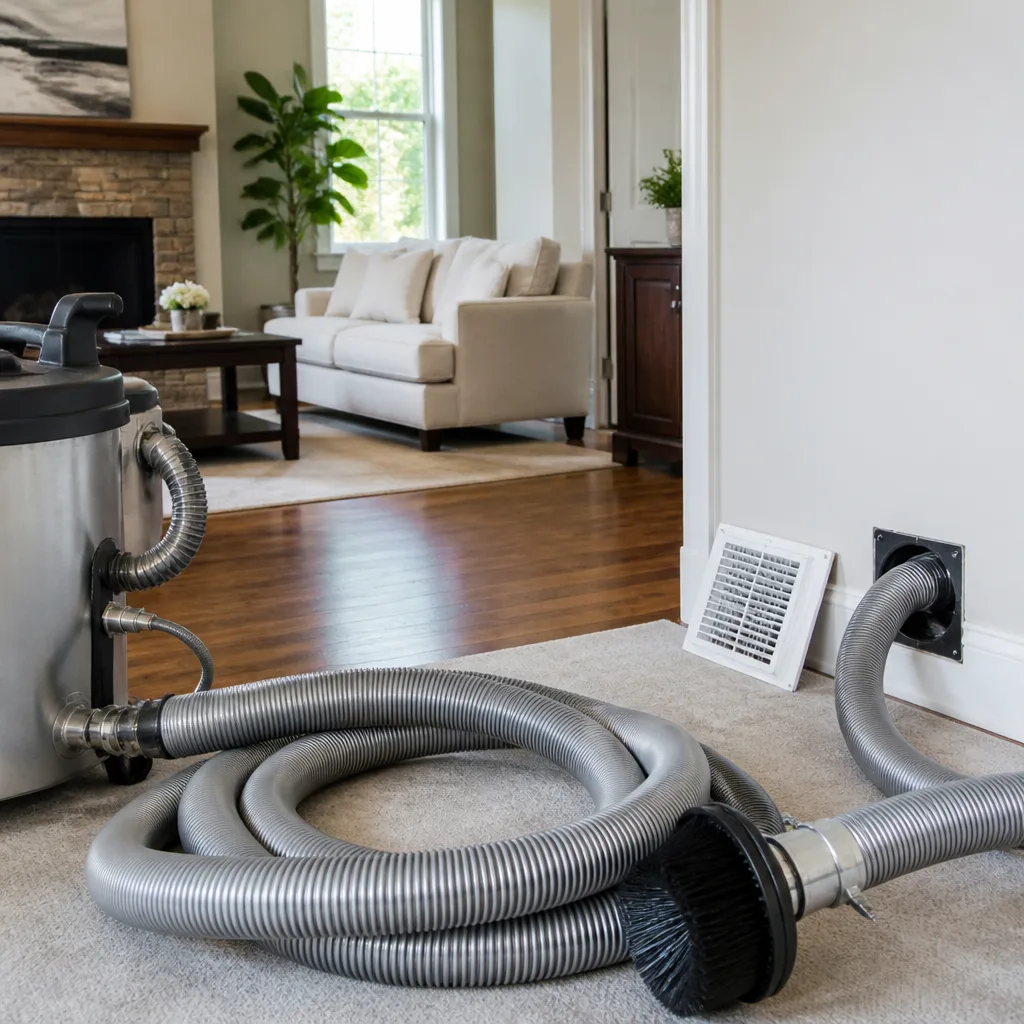 Whole-home duct cleaning
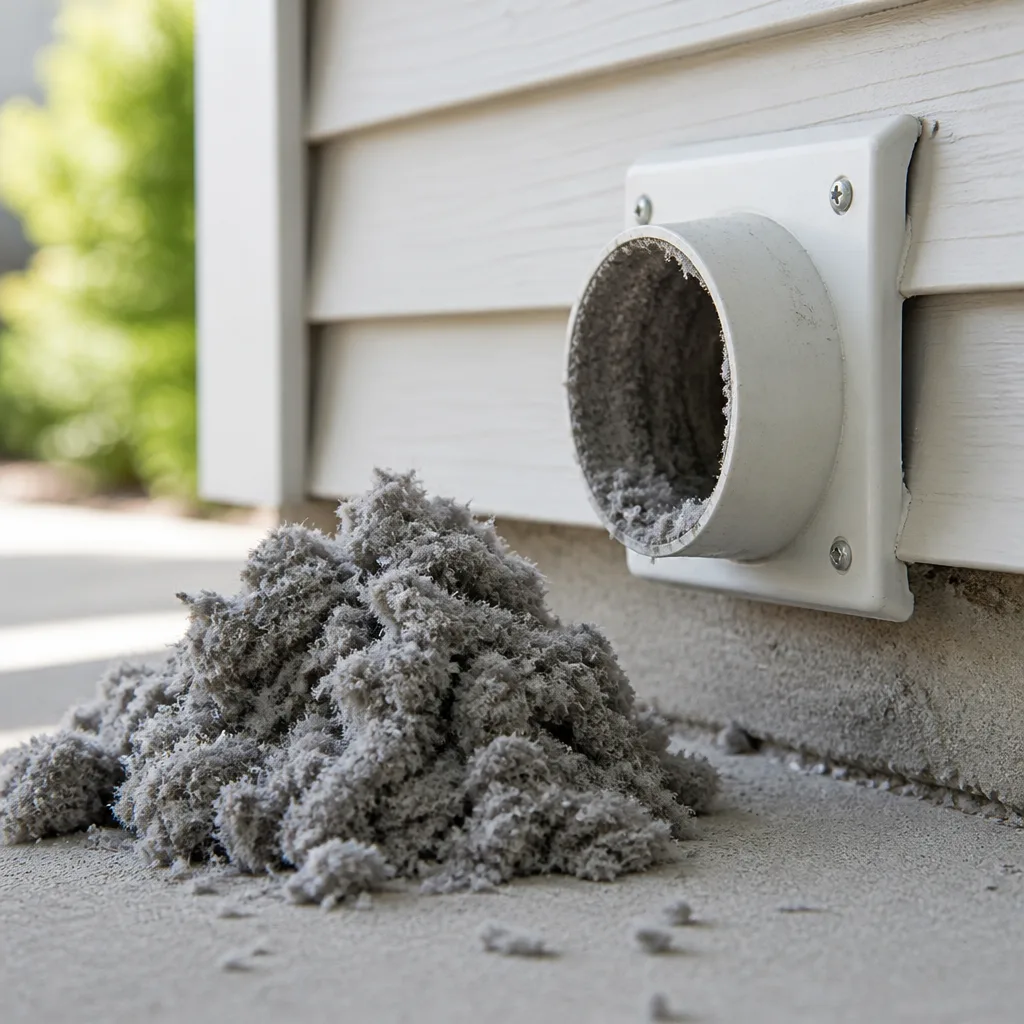 Dryer vent cleaning
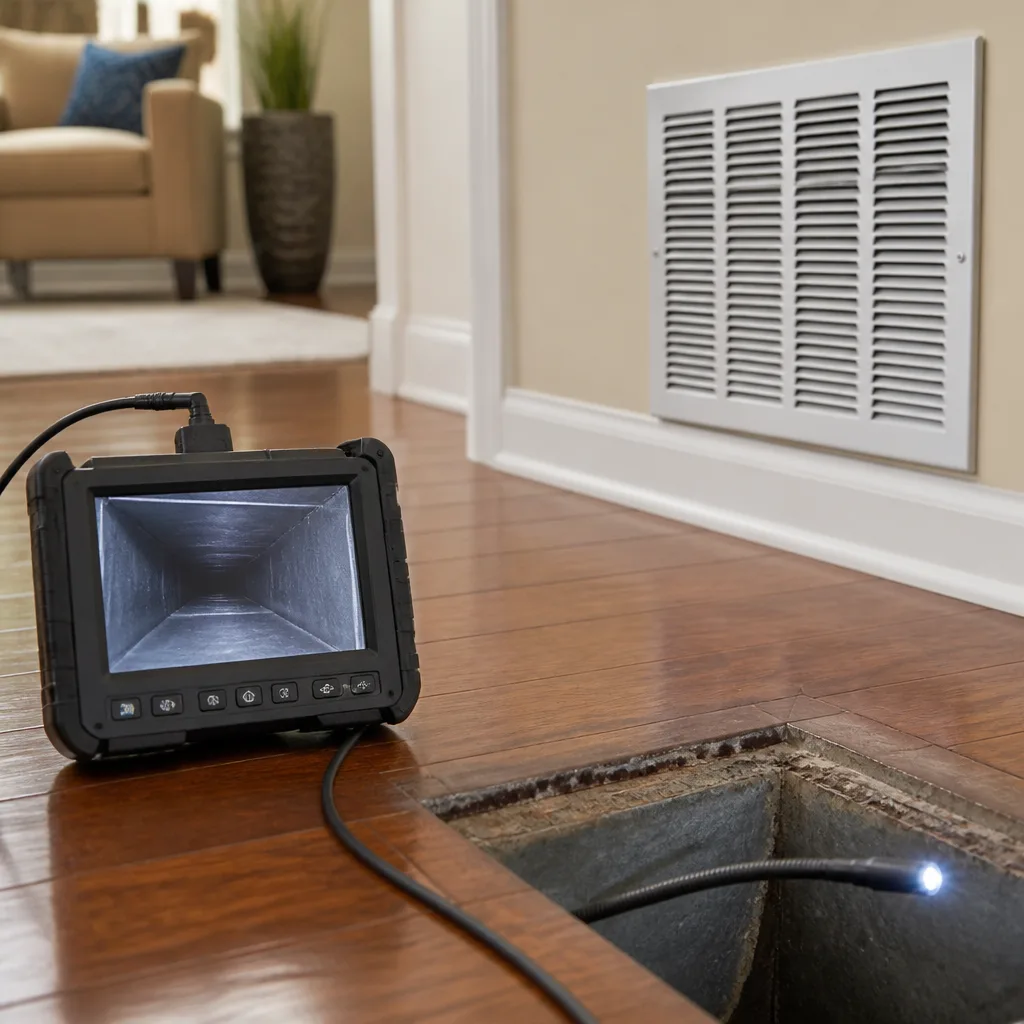 Camera inspection
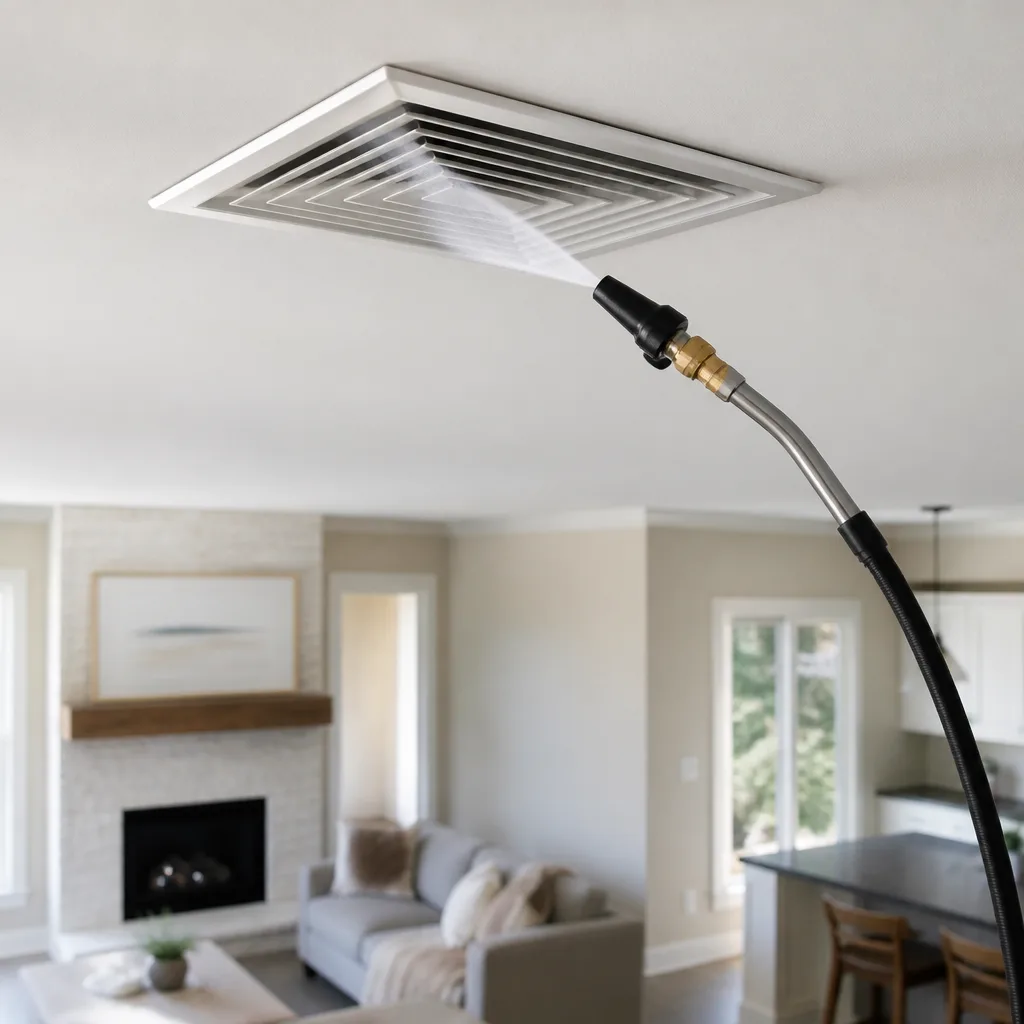 Sanitizing & deodorizing
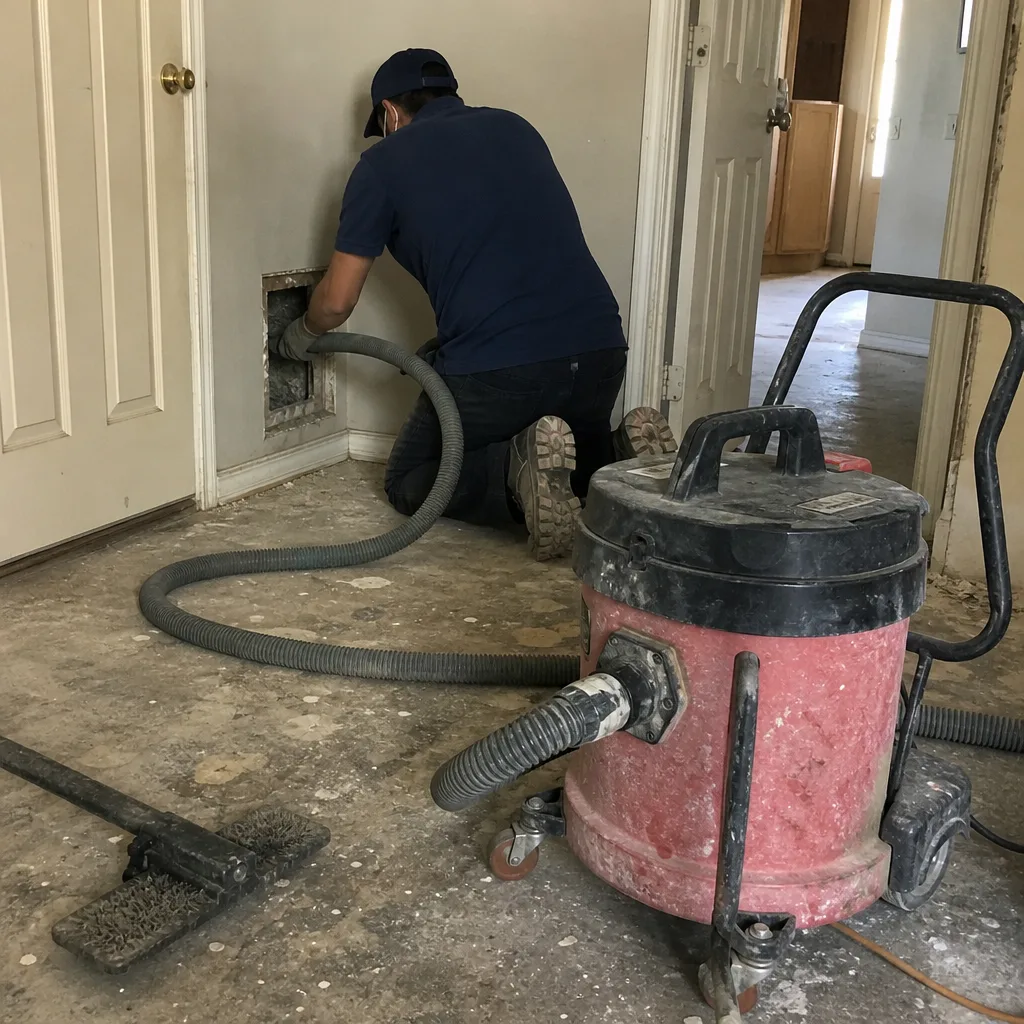
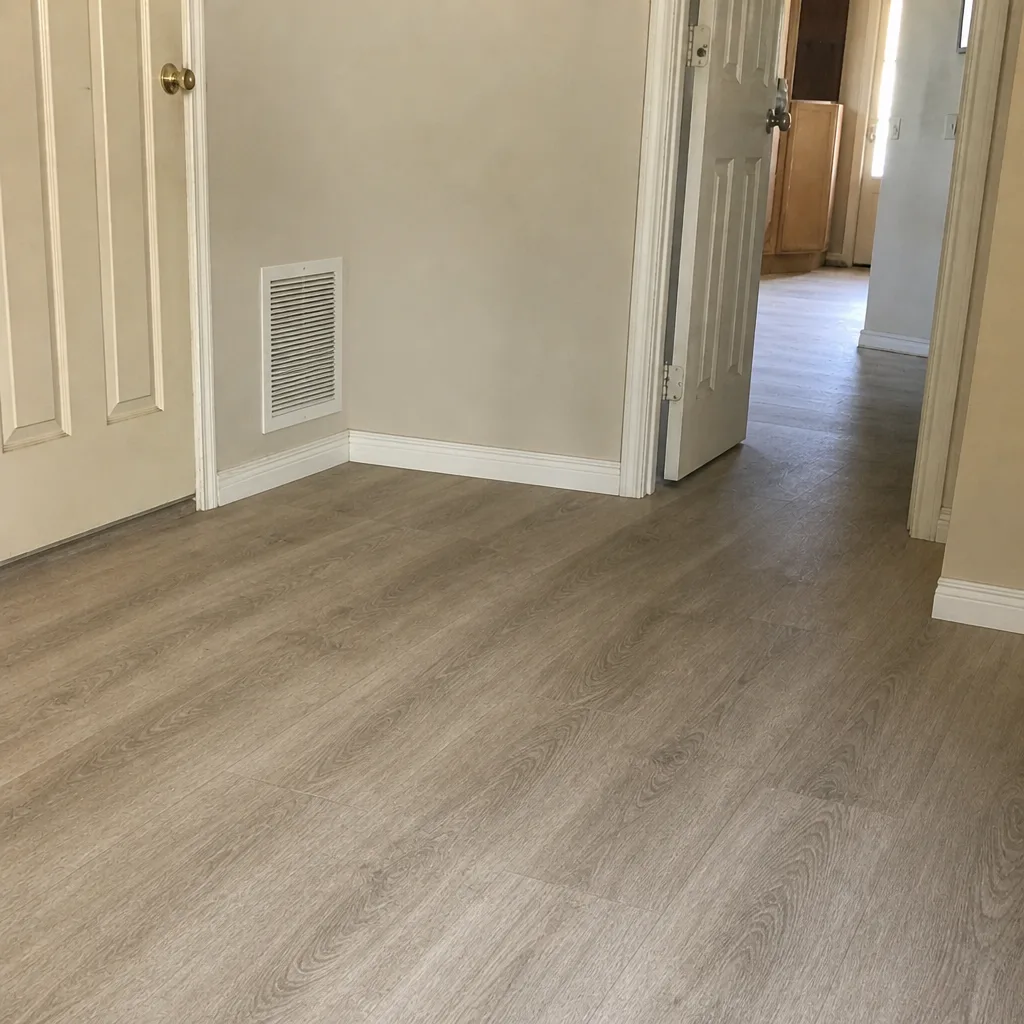
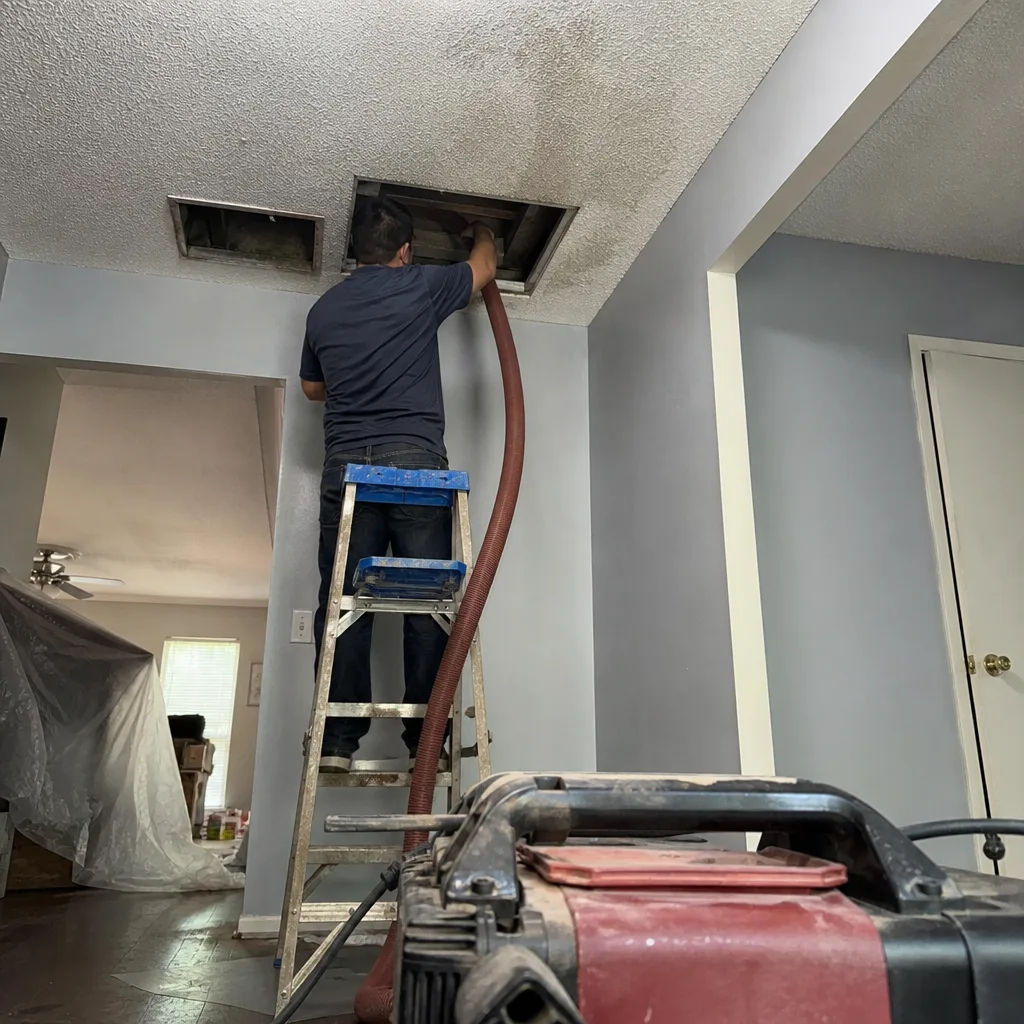
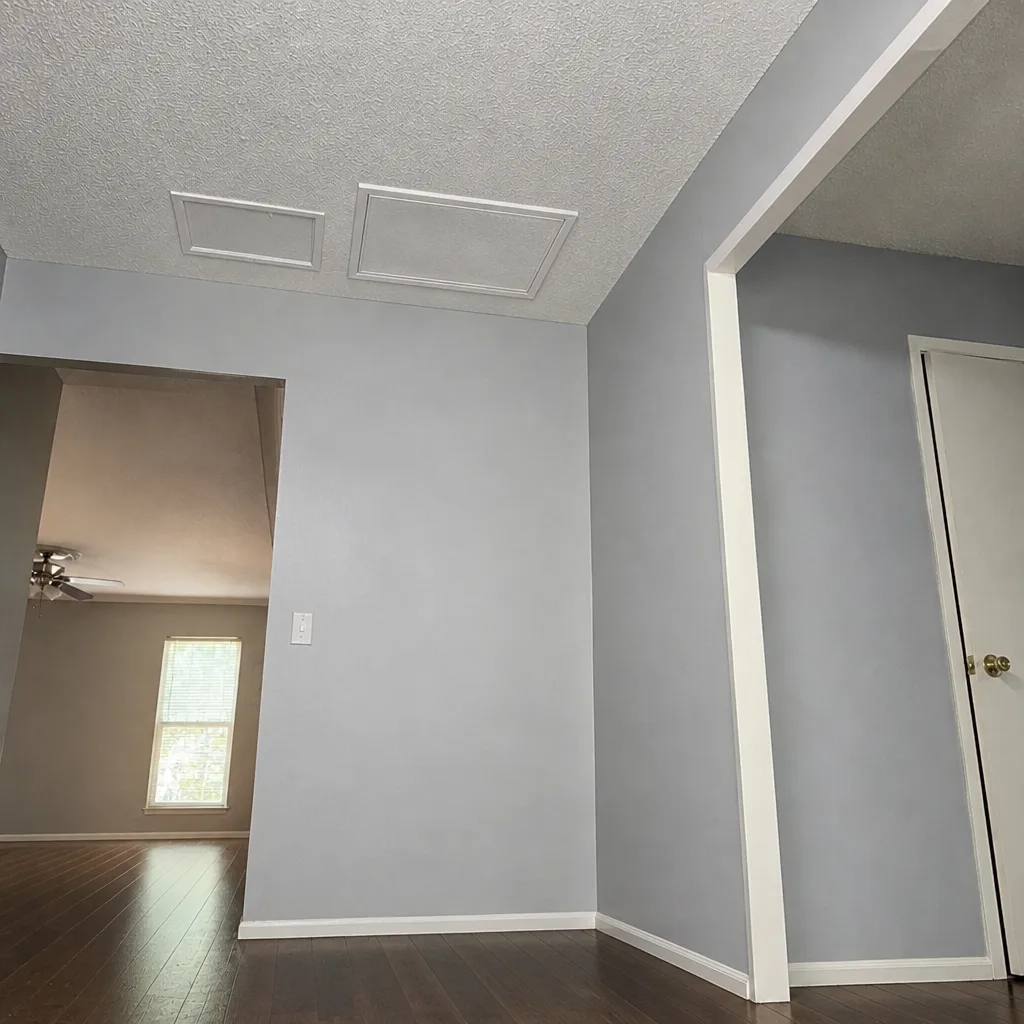
Whole-system duct and dryer vent check with before-and-after photos - you see exactly what came out of your vents
That "$99 whole-house special" is a bait ad - the real number appears once they are in your hallway, or the "clean" is a shop-vac at the register. We photograph the inside of your ducts before and after instead.
Air Duct Cleaning Maintenance Checklist for Grand Prairie Homeowners
The most-quoted rule in this trade says to clean your ducts every three to five years. That number was written as a floor, not a ceiling, and it quietly fails a lot of homes. A Grand Prairie house with two shedding dogs, a return pulled through a crawl space, and a backyard full of cedar can load a duct system well past the threshold of needing attention in far less time than three years. The guideline isn’t wrong. It’s just too vague to act on, because it counts years instead of evidence.
This guide replaces the calendar with a monitoring system. You’ll get a quarterly room-by-room inspection you can run yourself, a filter log that turns darkening speed into a leading indicator, and the Grand Prairie seasonal triggers that actually move the needle. You’ll also learn where your job ends and a professional’s begins.
Quick Answer
Maintaining your air ducts in Grand Prairie means running a short visual and airflow check at every register four times a year, logging filter replacement dates and watching how fast filters darken, and watching for seasonal triggers like spring pollen and post-storm dust. Schedule professional air duct cleaning when those checkpoints show real buildup, not on a fixed multi-year timer. A checklist tells you when cleaning is warranted; it keeps you from both over-cleaning and ignoring a genuinely degraded system.
Styles & brands we work with
- Whole-home duct cleaning
- Dryer vent cleaning
- Camera inspection
- Sanitizing & deodorizing
Table of Contents
- Why a Checklist Beats a Cleaning Schedule
- Your Quarterly Room-by-Room Inspection
- The Filter Log: Your Best Early-Warning Signal
- Grand Prairie Seasonal Triggers to Watch
- What to Photograph and How to Share It
- Homeowner Tasks vs. Professional Tasks
- Don’t Skip the Dryer Vent
- When to Call a Professional
Why a Checklist Beats a Cleaning Schedule
A calendar tells you what month it is. It can’t tell you whether your ducts need anything. Two houses on the same block can have wildly different dust loads for reasons that have nothing to do with age: one has a return that pulls air across a dusty garage, the other has a sealed return and a high-efficiency filter. Cleaning both on the same three-year timer is guesswork dressed up as maintenance.
A checklist works differently. You’re looking for observable, dateable evidence. When did that register last look gray? How long did the last filter take to darken from white to a visible tan? Did airflow at the back bedroom get noticeably weaker over the summer? Once you have those observations written down, the decision to clean stops being a feeling and starts being a judgment you can defend.
That matters in Grand Prairie because the local climate pushes organic material through the system most of the year. Warm months mean the air conditioner runs long cycles, and a long-running system moves a lot of air across a filter and through duct walls. Whatever’s suspended in that air settles somewhere, and the question is only how fast.
In our experience, two patterns come up again and again. A home that’s monitored honestly goes two or three years without needing anything beyond filter changes. A home that ignores the signs can accumulate enough buildup that a first cleaning takes noticeably longer and reveals a loose joint or a torn flex run that a routine inspection would have caught earlier. The checklist doesn’t just tell you when to clean. It tells you when something else is wrong.
Your Quarterly Room-by-Room Inspection
Pick the same weekend each quarter so the comparison is fair, and set aside thirty minutes. You need a flashlight and your phone. Walk every register in the house, not just the obvious ones. Bedrooms and a home office are where weak airflow hides longest, because nobody sits in there thinking about the duct behind the grille.
At each register, run this sequence:
- Look at the grille color. A thin even film is normal. Distinct gray banding, dark streaks radiating from the vanes, or fuzz growing at the edge of the opening means material is actively being deposited.
- Feel the airflow with the back of your hand. Hold it a few inches from the grille. You’re not measuring volume; you’re comparing. Note whether this register feels strong, average, or weak compared to the others.
- Shine the flashlight into the throat of the register. Angle it so you can see the first several inches of duct wall. Note the color of the liner or sheet metal and whether you can see a dust ridge at the bottom.
- Check for staining or dust tracks around the grille frame and the ceiling or wall around it. A faint halo is an early sign of leakage at the boot.
- Snap one photo with the flashlight on and the register in frame, and note the date.
Write two or three words per register in a running note on your phone. “Back bedroom – weak, gray. Office – normal.” That’s all it takes. After two or three rounds you’ll have a baseline, and any register that changes against that baseline is telling you something the calendar never would.
Pay particular attention to returns. A single central return pulls a large volume of air, and if it sits low on a wall or in a hallway floor, it also collects whatever gets kicked up from the floor. A return grille that darkens faster than the supplies is common and worth noting, because it often points to the filter doing more work than it should.
The Filter Log: Your Best Early-Warning Signal
Your filter is a sample of everything the system is pulling in. That makes its darkening rate the single most useful number a homeowner can track. Not the filter’s age. The rate.
Start a simple log. A note on your phone works fine. For each filter change, record the date, the filter size, the filter’s MERV rating, and one photo of the used filter next to the new one. Then record how many weeks the old filter ran. Do this twice and you already have a trend.
Here’s how to read it:
- Filter darkens fast and the home is clean. Something is introducing material upstream: an unsealed return, a gap in a duct joint, or a return that draws from a dusty space like an attic or garage. That’s a duct integrity question, not a filter question.
- Filter darkens fast and the home is dusty. The system is likely distributing what it’s pulling in. Worth a professional look.
- Filter stays clean for months past its expected life. This is usually good, but check that air is actually moving. A filter that stays pristine while certain rooms feel weak can mean a damper is closed or a duct run is disconnected.
- Filter looks wet or smells musty. Stop and address moisture. A wet filter is a sign of a condensation problem that a cleaning won’t solve.
Track which filter you’re using too. A higher-MERV filter catches more but loads faster and can restrict airflow if the system wasn’t designed for it. If you change filter brands and the darkening pace shifts, that’s the filter, not the ducts. Keeping the variable steady is how the log stays useful. When a filter upgrade is on the table, ask about a media cabinet from a name like Aprilaire or Honeywell that’s matched to your system rather than guessing at a retail filter’s fit and flow.
Grand Prairie Seasonal Triggers to Watch
Grand Prairie sits in a part of North Texas where the seasons that matter to a duct system aren’t the ones on a wall calendar. These are the local triggers worth flagging on your checklist, each one tied to a specific observation.
Spring: pollen load
Cedar and the broader spring pollen wave are the heaviest particulate season here. When everything outside is yellow-green, your filter is catching a lot of it, and any return that draws from an attic or a loose joint pulls it in directly. Watch the filter darkening pace in spring specifically. If it doubles compared to winter, don’t panic, but do check the returns and note how fast the register film builds. That’s the season most likely to shorten a cleaning interval.
Summer: condensation windows
Long cooling cycles and high humidity create the conditions where duct surfaces stay cool and damp, especially on runs through unconditioned attic space. A duct that’s sweating or has insulation gaps will hold dust differently than a dry one, and it’s often where a musty smell starts. During summer, look for condensation stains near registers, listen for a rattle at the boot, and note any room that smells off when the system first kicks on.
Post-storm: particulate surges
After a strong storm, dust and debris get stirred up, some of it fine enough to ride through a return. If windows or doors were open during a storm, or if you’ve had roofing or exterior work done, treat it as a trigger event. Check the filter, check the returns, and note whether dust appears at registers within a few weeks.
Remodel and renovation
Any drywall, sanding, or flooring work is a major particulate event. Seal registers before the work starts if you can, and treat the first cleaning after a renovation as a different job from a routine one.
If you’ve had an addition, a new HVAC install, or ductwork moved, use this as the moment to verify the system was sealed properly. That’s where professional Prestige Air Duct service and a dedicated repair visit often pay for themselves, because a poorly sealed new run will feed contamination into the whole system.
What to Photograph and How to Share It
A photo is the one piece of documentation that lets a technician understand your system before anyone arrives. It also protects you, because it makes the before-and-after comparison concrete. Get in the habit of a standard shot at each checkpoint.
At each register, photograph:
- The register from about three feet back, with a light on, so the grille and the surrounding wall or ceiling are both visible.
- A close shot down the throat of the register with the flashlight angled to show the first several inches of duct wall.
- The used filter, next to the new one or a ruler, for scale.
- Any stain, halo, condensation mark, or loose joint you noticed.
Keep the photos in one album with dates. When you call about a cleaning, you don’t need to describe your system from memory. You can say “the back bedroom supply has darkened noticeably since spring” and send three frames that show it. A technician can look at those and tell you whether it’s a cleaning question or a repair question before the visit, which saves everyone time.
The same photos are your proof when a cleaning is done. Professional-grade work should come with before-and-after images of your own ducts, not stock photos of somebody else’s system. Ask for them. A company whose process is built on documented, equipment-verified cleaning will produce them without hesitation. That’s what we mean when we call it the Prestige standard, and it’s the simplest way to tell a real process from a visual-only walkthrough.
Homeowner Tasks vs. Professional Tasks
Most duct maintenance is not dangerous. Some of it is, and confusing the two is how people get hurt or make a problem worse. Here’s the line.
Tasks you own:
- The quarterly register walk and photo log.
- Filter changes and the filter log.
- Keeping returns clear of furniture, rugs, and clutter.
- Vacuuming registers and grilles from the room side.
- Watching for moisture, stains, and smells and writing down when they appear.
- Calling to schedule a professional when the checklist says so.
Tasks that require a trained professional:
- Opening up ductwork to clean the interior of the runs.
- Sealing or repairing joints, boots, and disconnected runs.
- Investigating the air handler, coil, and any part of the system that’s energized or under refrigerant pressure.
- Any work around gas-fired equipment.
- Anything inside the electrical panel.
- Reaching ductwork in tight, hot attic spaces or under the house.
Two of those carry real risk. Electrical work at the panel can be lethal if you don’t know what you’re doing. Gas lines and gas-fired equipment are not a homeowner job. And a system with a suspected refrigerant leak or a damaged coil needs a licensed HVAC technician, full stop. We handle duct cleaning and duct repair. When a checklist observation points to the equipment itself, we say so and point you to the right trade. An honest checklist protects you from the wrong kind of service as much as it points you to the right one.
Don’t Skip the Dryer Vent
Your dryer vent isn’t part of your HVAC system, which is exactly why it gets ignored. It handles hot, moist, lint-laden air every time the dryer runs, and lint accumulates on the duct walls. That’s a fire-safety issue, not a cosmetic one, and it deserves its own checkpoint on your maintenance calendar.
Run a quick check at the same quarterly interval:
- Look behind the dryer. Lint buildup around the connection is a warning sign.
- Check the exterior vent flap. It should open freely when the dryer runs and close when it stops.
- Notice drying time. Clothes that used to take one cycle and now take two are telling you the vent is restricted.
- Feel the exterior vent while the dryer runs. Weak or no airflow means trouble.
A restricted dryer vent also costs you in efficiency, since the dryer runs longer to do the same job. Because it’s a distinct safety and efficiency issue with its own protocol, we treat dryer vent cleaning as a dedicated service rather than an add-on. If your quarterly check flags it, book it as its own appointment.
When to Call a Professional
Some signals are worth a call on their own, without waiting for the next quarterly round.
- Register dust returns within weeks of a cleaning, or a register darkens fast while the rest stay clean.
- Airflow at one or more rooms has dropped and stayed down.
- You can see visible buildup in the throat of a register, or a dust ridge on the duct wall.
- A musty or dusty smell appears when the system starts up.
- You’ve had a renovation, a storm event, or new ductwork installed.
- The filter darkens in half the time it used to, for more than one change.
- You’re buying the home, moving in, or managing a rental and need a baseline.
A clogged dryer vent is its own call, and so is any visible damage, a torn flex run, or a joint that’s come apart. Prestige Air Duct offers free estimates in Grand Prairie, and our technicians have up to 12 years of experience with the equipment to find the difference between a cleaning and a repair. Call (866) 361-6858. We answer 24/7. Fast dispatch from 7am to 7pm, Sunday through Friday.
See the difference
 Before
 After
 Before
 After
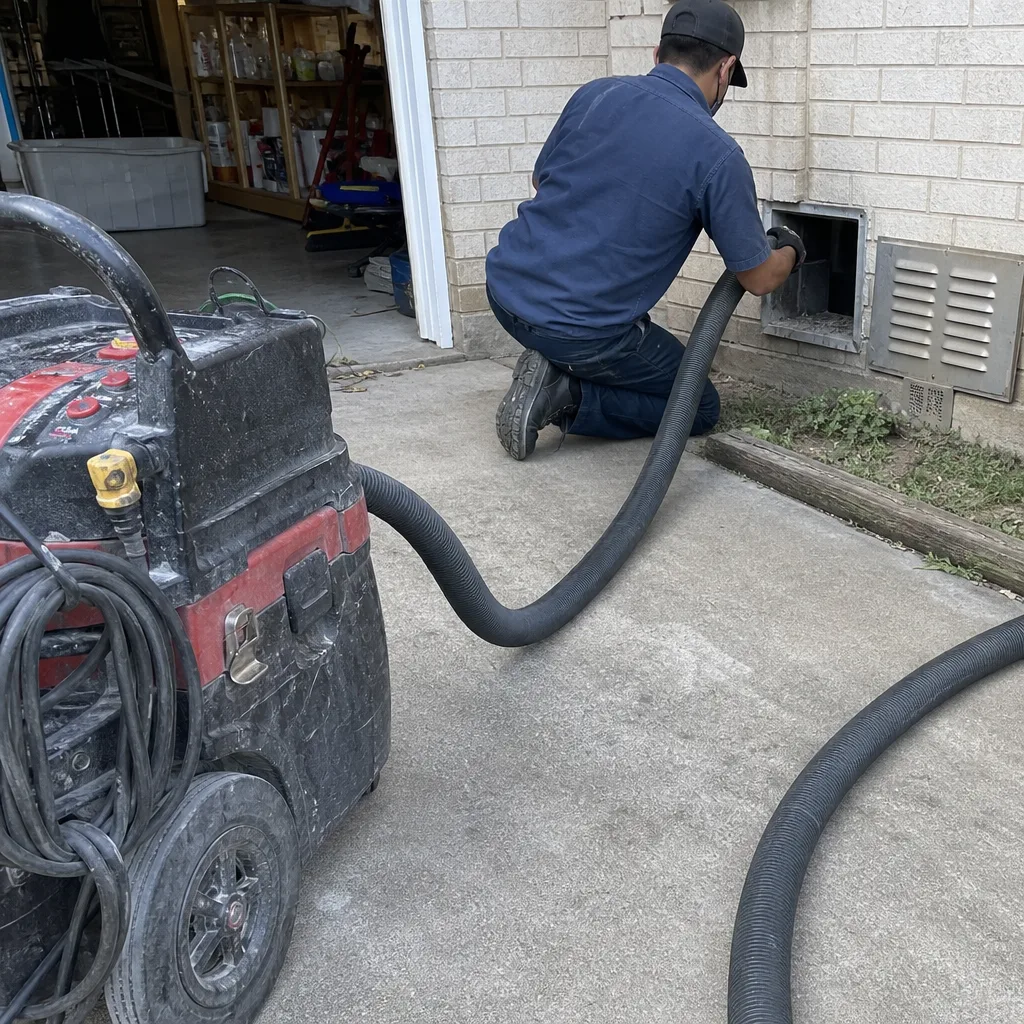 Before
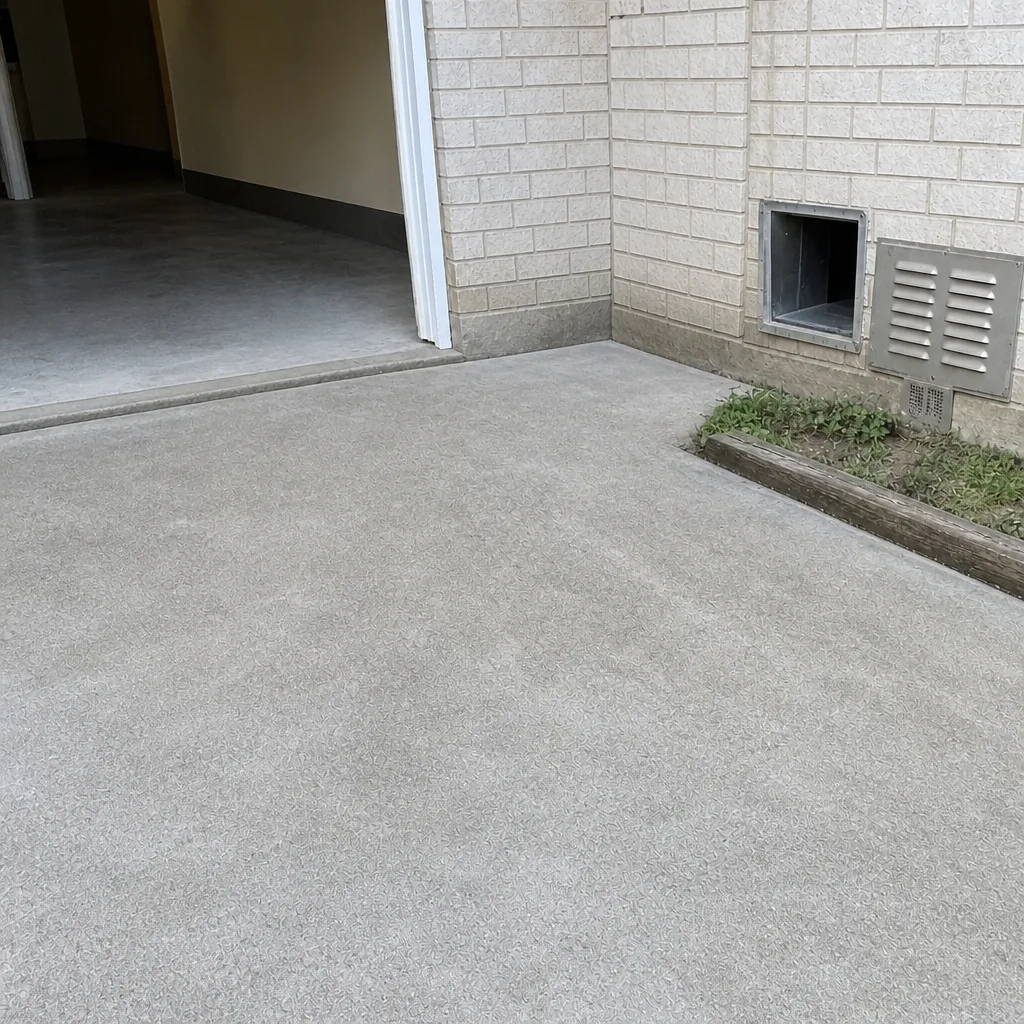 After
Common Mistakes to Avoid
- Cleaning on a fixed timer. The three-to-five-year rule is a floor, not a schedule. A Grand Prairie home with dogs and a loose return can pass the threshold faster, and a sealed home with good filtration can go longer.
- Never logging filter dates. The date and the filter’s rate of darkening are the two numbers that tell you whether the system is straining. Without them, you’re guessing.
- Judging by the register grille alone. A clean grille doesn’t mean a clean duct. Look down the throat with a light, and note the duct wall.
- Skipping the return side. Returns draw the most material and often show the earliest signs. A single central return in a Grand Prairie hallway is easy to overlook and the most informative one to check.
- Treating every register the same. The back bedroom and the home office are where weak airflow hides. Check them every quarter, not just when someone complains.
- Ignoring the dryer vent. It’s a separate system and a separate risk. Falling behind on it is a fire-safety and efficiency issue, not a cleaning annoyance.
- Accepting a visual-only inspection. A coupon price that turns into a bigger invoice once the technician is at your door is the industry’s oldest trick. Ask for a whole-system price agreed before work starts, and before-and-after photos of your own ducts.
Frequently Asked Questions
Air duct cleaning in Grand Prairie is priced per system, not per vent, so an honest quote reflects the size and layout of your ductwork rather than a count of registers. We set one flat price per system and agree it in writing before any work starts, and estimates are free. Call (866) 361-6858 for an exact quote.
There’s no single interval that fits every home, which is why a checklist beats a calendar. Use the quarterly register inspection, the filter darkening rate, and the spring pollen and post-storm triggers to decide. Homes with pets, a loose return, or recent renovation usually need it sooner; well-sealed homes with good filtration can go longer.
A low teaser price usually comes from a visual-only walkthrough or per-vent pricing that grows once the technician is on site. Professional cleaning uses equipment like Rotobrush and Nikro systems and takes real time per system. A defensible quote is a whole-system price in writing, with documented before-and-after results.
Ask for before-and-after photos of your own ducts and for a documented record of the work. Equipment-verified cleaning that produces photos is the standard. A crew that can show you what changed is doing the work; one that can’t is asking you to take it on faith.
No, not effectively. A shop vacuum can’t reach the duct walls or the connected runs the way professional equipment can, and a cosmetic pass may stir up dust without removing the settled material. Stick to registers, filters, and the inspection you can safely do from the room, and leave the interior of the system to a trained professional.
Cleaning removes settled material from the system; repair fixes the leaks and loose joints that let that material in. If your inspection shows dust returning fast at one register or a stain around the boot, the underlying issue is often a seal, not a cleaning. Prestige Air Duct offers air duct repair as a standalone service so a leaking joint gets fixed rather than cleaned around.
For anything inside the system, a licensed technician is the right call. Prestige Air Duct is licensed and insured, works with air-quality partners including Aprilaire and Honeywell, and uses Abatement Technologies equipment when remediation demands it. Call (866) 361-6858 for a free estimate in Grand Prairie.
The Bottom Line
A maintenance checklist for air ducts isn’t a cleaning schedule in disguise. It’s a monitoring system that turns a vague multi-year rule into specific, dateable evidence, so you can decide when professional cleaning is truly warranted and when it isn’t. Run the quarterly register walk, log your filter changes and watch how fast they darken, and flag the Grand Prairie triggers that push material through the system: spring pollen, summer condensation, post-storm dust, and renovation. Photograph what you find and share it. Know which jobs are yours and which need a licensed professional. Then call when the evidence says so.
When it does, Prestige Air Duct is here with professional-grade equipment, training backed by technicians with up to 12 years of experience, and a documented process built around measurable results. Free estimates. Call (866) 361-6858. We answer 24/7. Fast dispatch from 7am to 7pm, Sunday through Friday.
Written by the team at Prestige Air Duct.