
Last updated November 15, 2026
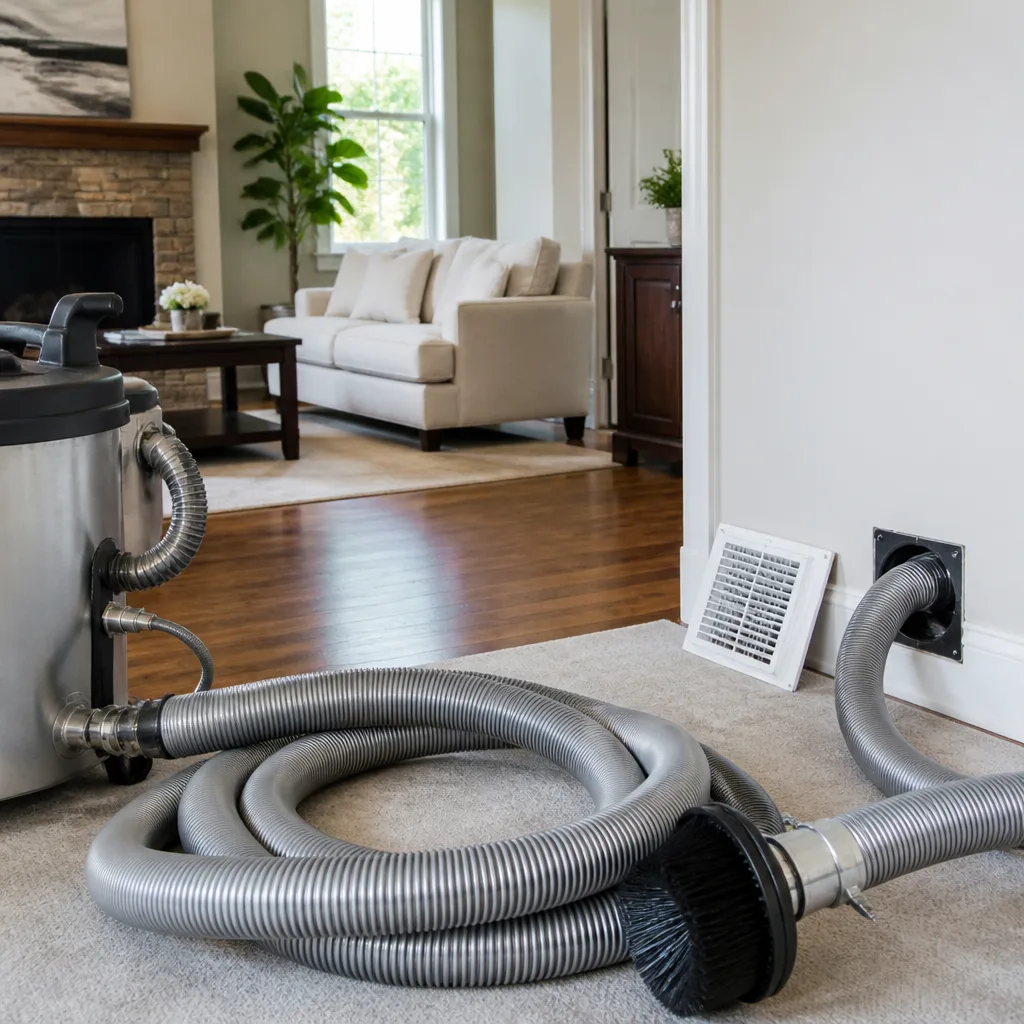 Whole-home duct cleaning
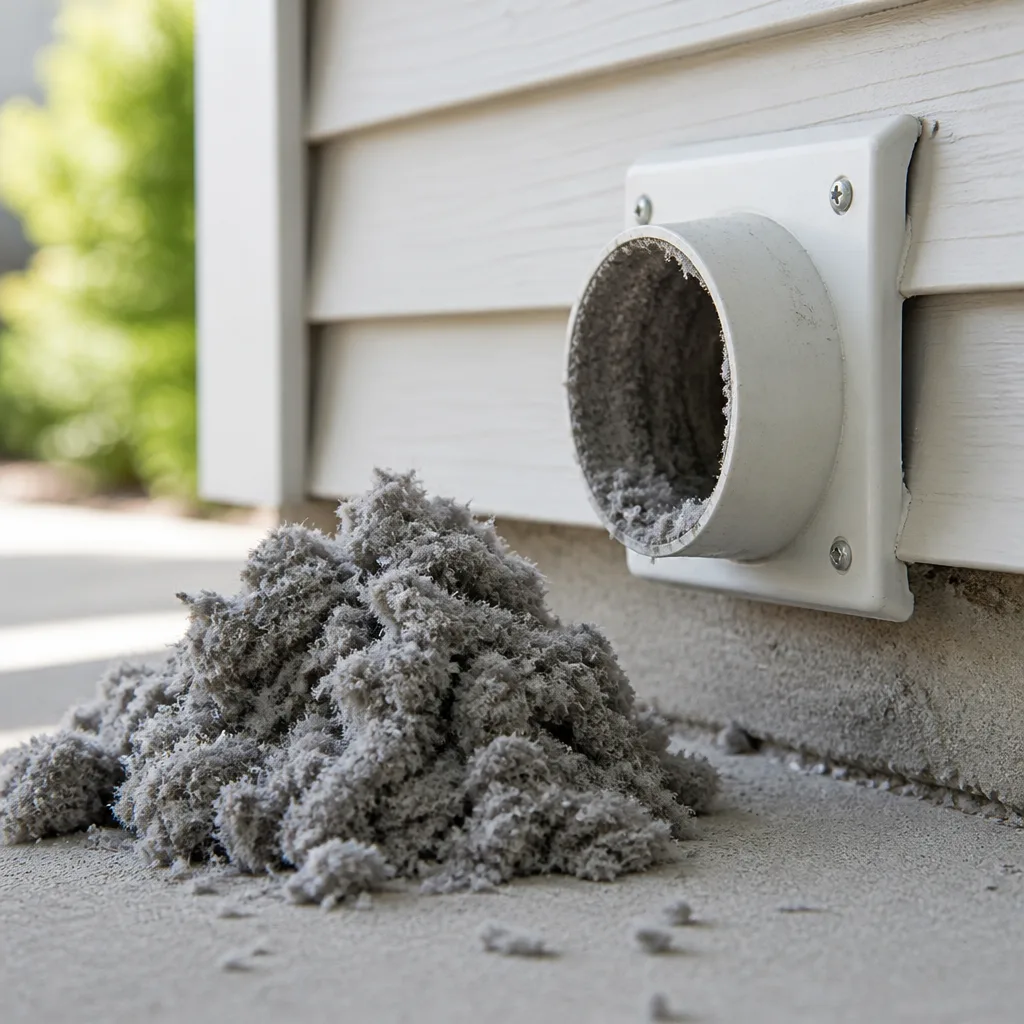 Dryer vent cleaning
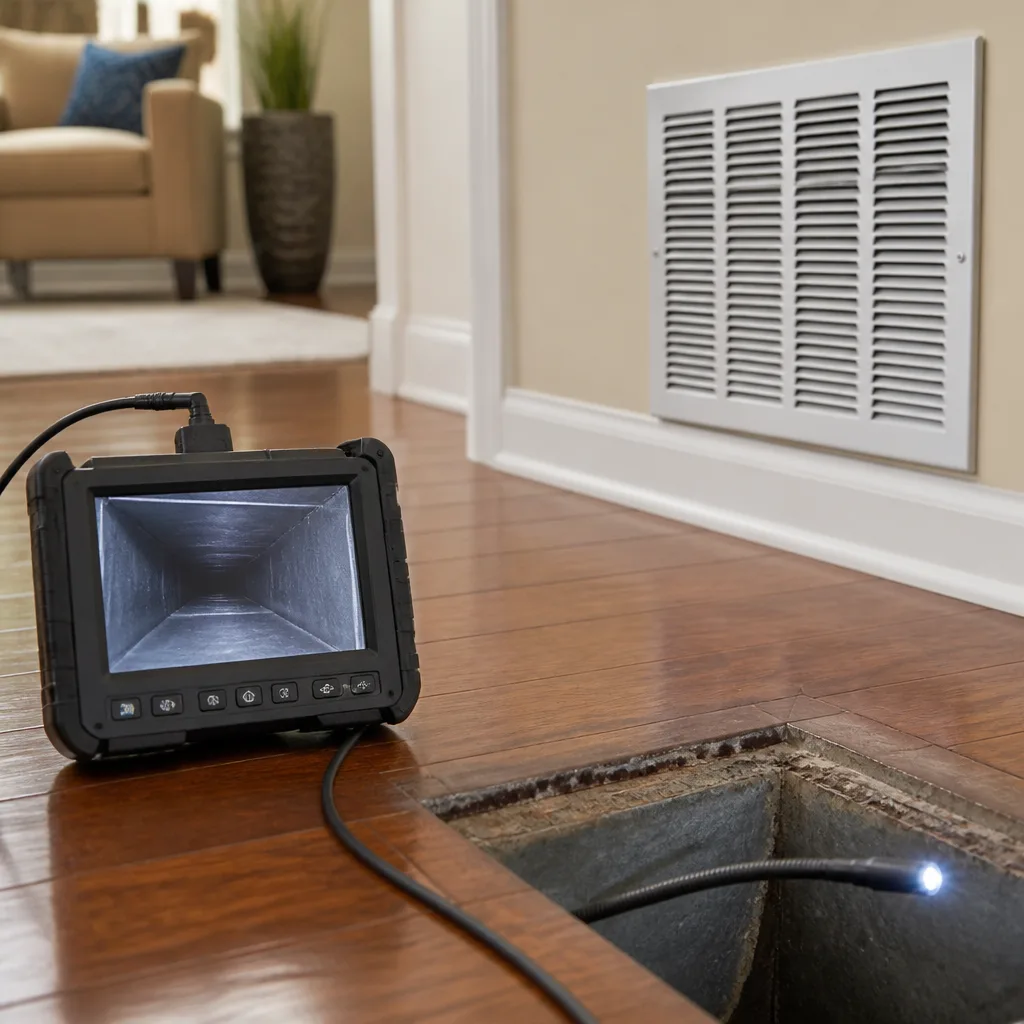 Camera inspection
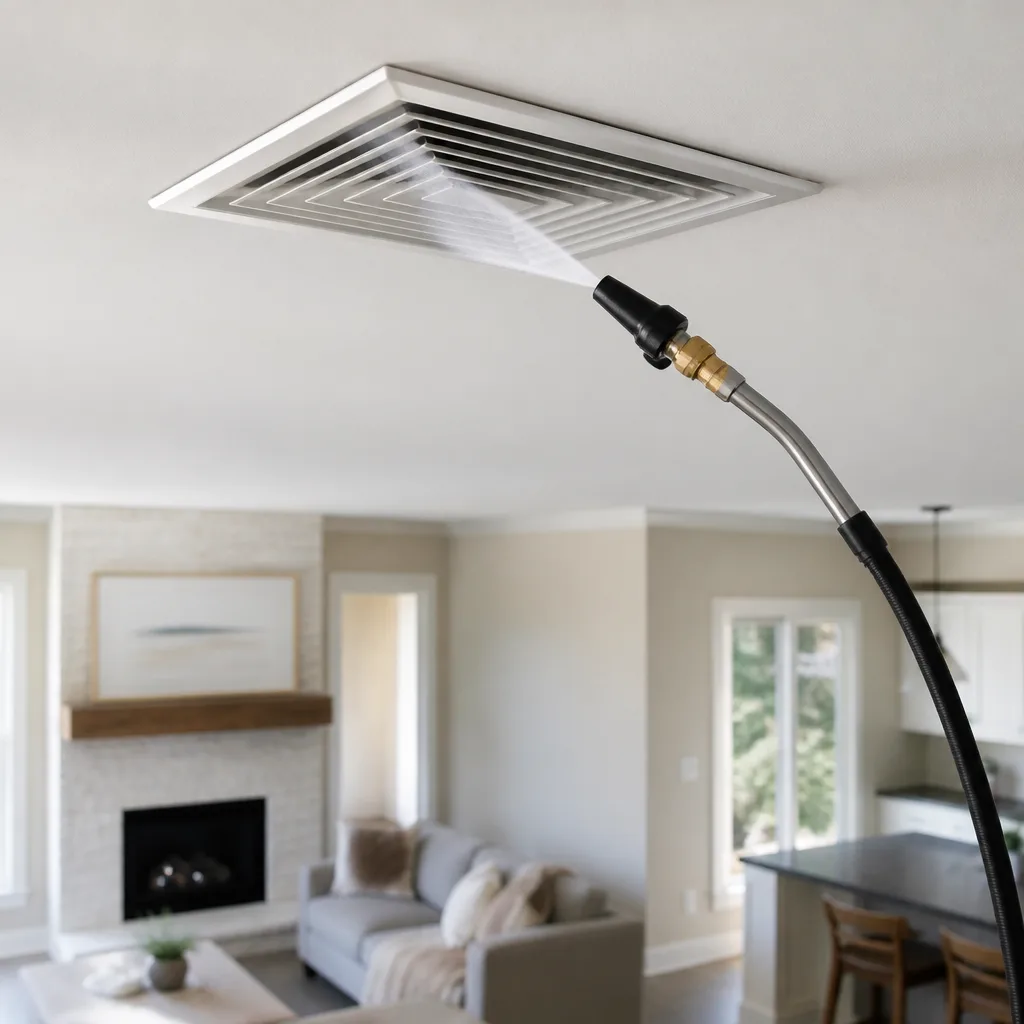 Sanitizing & deodorizing
Whole-system duct and dryer vent check with before-and-after photos - you see exactly what came out of your vents
That "$99 whole-house special" is a bait ad - the real number appears once they are in your hallway, or the "clean" is a shop-vac at the register. We photograph the inside of your ducts before and after instead.
The Complete Guide to Air Duct Cleaning in Grand Prairie
A negative-pressure vacuum rated below 2,000 CFM can’t dislodge compacted debris from a Texas home’s main trunk line. That’s the tool most bargain duct cleaning packages show up with, and it’s why so many Grand Prairie homeowners end up disappointed after a “cleaning” that barely moved the dust. This guide walks through a legitimate duct cleaning job from start to finish, equipment by equipment, so you know exactly what should happen inside your home. We’ll cover vacuum ratings, the correct work sequence, why Grand Prairie’s soil and humidity create a distinctly local debris profile, and what documentation a reputable company should leave behind. By the end, you’ll be able to tell real work from a truck-mount show.
Quick Answer
Professional air duct cleaning in Grand Prairie uses negative-pressure equipment rated around 4,000 CFM and above to pull loose debris out of the whole system while a technician agitates every branch line, and the job is done in a fixed sequence: inspect, agitate, vacuum, verify. A legitimate job cleans the supply and return sides independently, then leaves you with photos and before-and-after airflow readings. Anything short of that is a surface sweep, not a cleaning.
Styles & brands we work with
- Whole-home duct cleaning
- Dryer vent cleaning
- Camera inspection
- Sanitizing & deodorizing
Table of Contents
- What Air Duct Cleaning Actually Involves
- Why CFM and Negative Pressure Matter Here
- The Correct Sequence, Step by Step
- Grand Prairie’s Debris Profile Compared to Drier DFW Suburbs
- Supply and Return: Why They’re Cleaned Separately
- What Evidence You Should Receive
- When Cleaning Isn’t Enough: Air Duct Repair
- Dryer Vents: A Separate Job With Separate Rules
What Air Duct Cleaning Actually Involves
Air duct cleaning is the mechanical removal of accumulated dust, construction debris, and biological growth from the supply and return ductwork of a home’s HVAC system, followed by a verification step that confirms the removal actually worked. It isn’t blowing air through the vents. It isn’t a wipe-down of the register grilles. The work happens inside the duct runs themselves, and the equipment and process you’ll read about below are what separates a real cleaning from a visual inspection in a truck.
Inside a typical Grand Prairie home, dust doesn’t just settle on top of surfaces. It gets pressed against duct walls by constant airflow, and over time those deposits become compacted. In our experience, that compacted layer is the part most cut-rate jobs miss entirely, because light equipment can’t break it loose. This is why air duct cleaning needs to be defined by equipment caliber and sequence, not by how long the technician was inside the house.
A complete cleaning should include:
- The main trunk line, which is usually the largest and dirtiest run
- Every branch line feeding individual rooms
- The return-side ductwork, which is often the heaviest-loaded section
- The blower compartment and evaporator coil access (cleaned carefully, not aggressively)
- Register and return grilles, removed and washed, not just wiped
What it should never include is a chemical fogger sprayed into the air stream to mask odor. If a technician’s first move is a scent, the sequence is already wrong.
Why CFM and Negative Pressure Matter Here
CFM stands for cubic feet per minute, and it’s the single most meaningful number on a duct cleaning quote. A vacuum rated at 4,000 CFM and above pulls a genuine negative pressure across the entire duct system, which means displaced dust flows toward the vacuum instead of puffing out into your living room. A unit rated below 2,000 CFM simply doesn’t move enough air to loosen compacted debris or maintain that pressure hold.
North Texas duct layouts raise the stakes. Homes in Grand Prairie frequently run long horizontal trunk lines through attic spaces and multiple branch runs to serve split floor plans. That geometry needs a vacuum with enough reserve to hold pressure at the farthest branch point, not just at the register nearest the truck. This is exactly where professional-grade platforms earn their keep. We operate Rotobrush and Nikro systems specifically because those are the platforms that hold pressure over long trunk runs and can be fitted with the right agitation heads for the airflow path in front of them.
Equipment caliber is a big part of what the name Prestige Air Duct is meant to signal. We also work with Abatement Technologies equipment, which is the standard platform in indoor air quality remediation. The pairing means we’re not deciding between “powerful enough” and “safe for occupied homes” – we’re choosing the right configuration for each job.
What to ask about the equipment
- What’s the vacuum rated CFM? If the answer is a shrug, that’s your answer.
- Is the vacuum truck-mounted or portable, and how does it reach the farthest branch?
- What agitation tools are used inside the duct, and are they sized for the duct?
- Will the technician run a HEPA filtration stage if there’s anyone in the home with respiratory sensitivity?
The Correct Sequence, Step by Step
The sequence is what separates a documented cleaning from a show. Every step depends on the one before it, and a technician who skips ahead is working blind. Here’s the order a process-driven job follows:
- Inspection before agitation. The technician opens access points, runs a camera through the trunk and key branches, and documents what’s actually there. This is where they find the collapsed flex run, the disconnected joint, or the heavy build-up behind a return grille that changes the plan.
- Containment and setup. The vacuum connection is established at the main trunk, registers are sealed off where needed, and the home gets drop cloths and corner guards.
- Agitation. Contact tools and air whips break compacted debris loose along every branch, working back toward the vacuum connection.
- Vacuuming under negative pressure. The loosened material is pulled out of the system while the vacuum runs continuously.
- Verification after vacuuming. The technician re-inspects with the camera and takes airflow readings at the registers, then compares those to the pre-cleaning numbers.
- Cleanup and documentation. Registers are reinstalled, the space is wiped down, and the before-and-after evidence is left with you.
In our experience, step five gets skipped most often in discount work, followed closely by step one. An inspection is the step that reveals problems – it’s easier to skip when the goal is to be in and out by lunch.
Grand Prairie’s Debris Profile Compared to Drier DFW Suburbs
Grand Prairie sits on heavy black clay soil that behaves very differently from the sandy, limestone-based soils of suburbs farther north and west. That clay doesn’t blow apart into fine dust the way dry soil does. Instead, it clumps, and during the dry stretches between rain it sends up fine particulate in short bursts that get pulled straight into a return grille. Once inside the ducts, clay particulate binds with dust and lint more aggressively than the loose, sandy debris found in drier parts of the metroplex.
Humidity adds the second layer. Grand Prairie typically runs more humid than the western DFW suburbs through the warm months, and that airborne moisture interacts with clay-based dust inside the ductwork. The result is a denser, more adhesive debris profile that sits harder against duct walls. Light agitation can knock some of it loose, but compacted material needs real contact tools and a vacuum that holds pressure long enough to move it out.
What this means in practice:
- Clay-heavy debris clings to flex duct liners rather than collecting loosely in the floor of the run
- Long humid stretches favor biological growth on any moisture present, particularly on evaporator coil surfaces and around the drain pan
- Debris weights toward the return side, which is why return lines need independent attention
- Exterior returns on older Grand Prairie homes often sit near ground level, pulling in dust from landscaping and clay dust kicked up by wind
If you’ve lived here through a dry spring, you already know what the wind does to your sidewalk. The same particulate ends up in your system, just less visibly.
Supply and Return: Why They’re Cleaned Separately
The supply side pushes conditioned air out into rooms, and the return side pulls room air back to the air handler. They’re on opposite sides of the blower, they carry different debris loads, and they need independent cleaning passes. A technician who vacuums only from the main supply trunk and calls the job done has left the return half untouched.
Returns usually carry heavier loads for a simple reason: they pull unfiltered air from living spaces, then the air passes through the filter. Grilles collect hair, pet fur, and large particulate before the filter, and that material can bind to the return duct walls. If the return-side run has a leak, unfiltered air from an attic or crawl space gets drawn in before the filter too, which is one of the reasons air duct repair matters as a service on its own.
You can verify both sides were addressed without climbing into the attic:
- Ask for photos of the return-side trunk and at least one return branch
- Confirm the technician took airflow readings at supply registers and at the return grille
- Look for the access points they cut or opened on both sides, then confirm they were properly sealed afterward
- Ask whether the return grille was removed and washed or just sprayed down
If the documentation only shows supply-side work, ask why. The answer tells you a lot.
What Evidence You Should Receive
Photos and airflow readings are the two verification documents a legitimate cleaning job should leave behind. Photos should show the inside of the ductwork before and after in the same location, from the same angle. Airflow readings should show the pre-cleaning and post-cleaning numbers at registers and at the return.
Photos matter because smoke tests and blowers look convincing in real time but leave no record. If the work is real, the record is easy. We build our jobs around this idea – clean ducts, verified – because the value of the service is easier to argue with evidence than with adjectives.
A proper closing packet from a process-driven technician typically includes:
- Before-and-after interior photos of the trunk, main branches, and return side
- Register airflow readings taken before and after agitation and vacuuming
- A brief written note of any defects found during inspection, such as disconnected runs or moisture near the coil
- Any product used on the system, named plainly
If a company’s price is materially lower than the rest, ask what got cut from the packet. Usually, it’s the inspection, the verification, or the return side.
When Cleaning Isn’t Enough: Air Duct Repair
Sometimes cleaning reveals a problem that another cleaning can’t solve. Disconnected flex runs, crushed trunks, torn duct liner, and failed mastic at joints all let unfiltered air into the system and conditioned air out of it. Cleaning around those defects is where you’ll see the problem return within a season.
We treat air duct repair as its own service for exactly that reason: we repair what others just clean around. If the inspection uncovers a leaking joint or a crushed run, sealing it before or alongside cleaning is the whole point. Repair capability inside the same service means you’re not coordinating a separate contractor once damage is found.
Signs you may need repair rather than cleaning
- A persistent musty smell that returns quickly after cleaning
- Certain rooms warmer or cooler than the rest of the house by a noticeable margin
- Visible debris around a register grille frame or along an attic duct joint
- A recent HVAC replacement where the ductwork wasn’t sized or connected properly
- Audible whistling or hissing at a fitting during a run cycle
Repair and cleaning aren’t an either/or decision. In most cases, a leaking system benefits from both, because sealing first makes the cleaning more effective and the airflow improvement last longer.
Dryer Vents: A Separate Job With Separate Rules
Dryer vent cleaning is not a subset of duct cleaning. Lint accumulation in a dryer vent is a fire safety issue, and it needs its own protocol, its own tools, and its own verification. We treat dryer vent cleaning as its own service line because lumping it into a duct cleaning quote is how it gets skipped or done poorly.
Dryer vents run from the appliance to an exterior termination, usually through a wall or up through the roof on Grand Prairie homes. The common failure points are the vertical rise, any elbows, and the transition from a semi-rigid duct to a rigid wall duct. Each of those catches lint, and each needs to be reached. Vent cleaning also checks the termination cap and the run’s total length, because a long vent run with multiple elbows is more prone to clogging than a short, straight one.
What good dryer vent service looks like:
- The run is traced from appliance to exterior termination
- Lint is removed with the right tooling for the vent’s diameter and number of elbows
- The exterior cap is checked for a functioning flapper and free of nesting material or obstruction
- The technician confirms actual airflow after cleaning
- Photos of the cleared run are left behind
Dryer vents are a fire risk. We treat them like one, which means a dedicated protocol and a dedicated record. We use Guardsman protection products as part of the service line, and our broader air-quality work spans Aprilaire and Honeywell product families when a system benefits from filtration upgrades after cleaning. Those are product partnerships and equipment choices, not certifications of any specific outcome.
Common Mistakes to Avoid
- Judging the job by price alone. A quote that’s less than half of what a full-system cleaning costs usually drops the inspection, the verification step, or the return side. Ask what was cut before you sign.
- Accepting verbal confirmation instead of documentation. If the technician says it’s done but has no before-and-after photos or airflow readings, you have no way to verify the work. Ask to see evidence of the same duct, from the same angle, before and after.
- Cleaning only the supply side of a North Texas layout. Returns carry the heaviest debris load and need independent attention. A job that doesn’t touch them hasn’t cleaned the part of the system doing most of the work.
- Assuming a new HVAC install means ducts are clean. A new system on old ductwork is one of the most common sources of construction debris, and no amount of premium equipment on the air handler cleans the duct it sits under.
- Spraying a scent fogger to cover a smell. Foggers mask the source without addressing it, and a musty odor that returns quickly is usually a sign of moisture or a leak that needs repair, not fragrance.
- Skipping the dryer vent because the ducts were cleaned. Dryer vents are a distinct fire safety concern with their own protocol. They don’t get treated as an add-on here, and they shouldn’t be treated that way by anyone else.
- Ignoring leaks found during cleaning. If the inspection reveals a disconnected run or crushed flex, cleaning without repair just puts the same problem back in the system. Fix the leak, then verify airflow.
See the difference
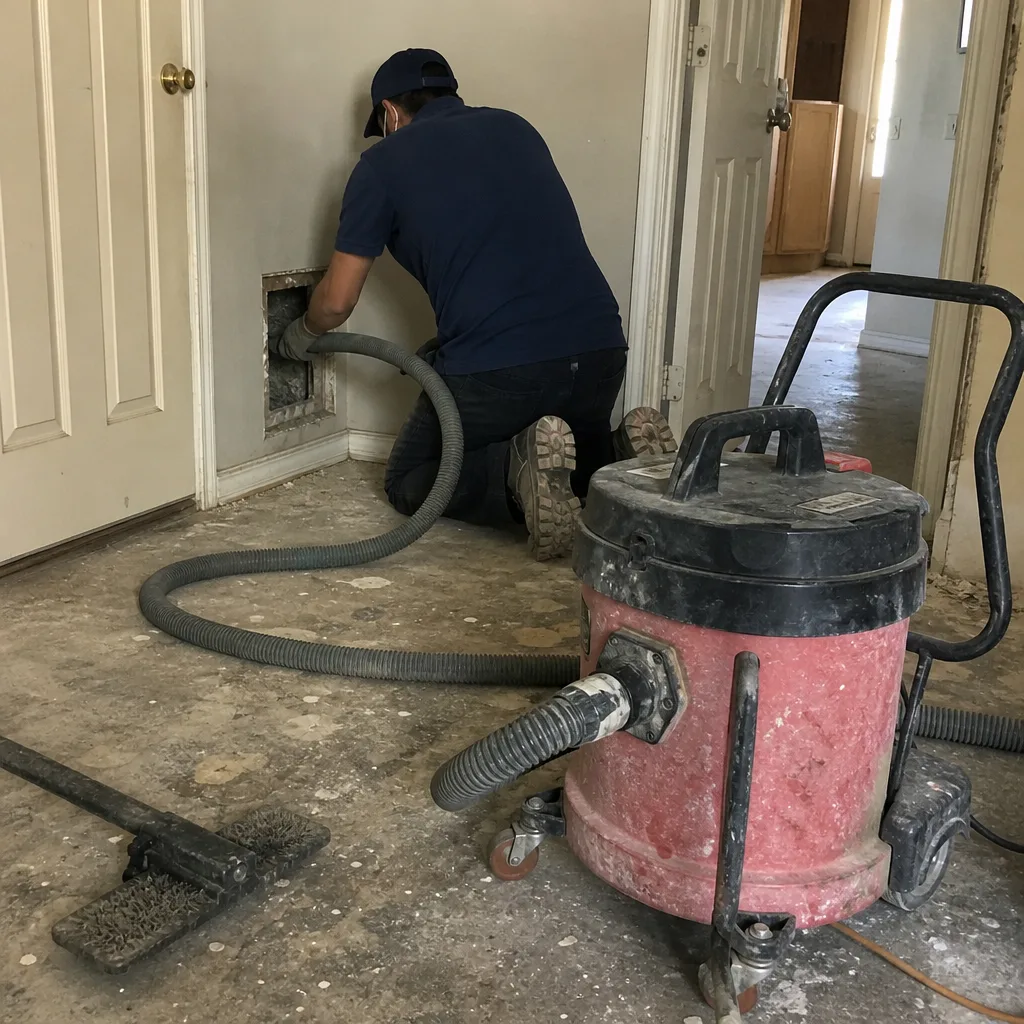 Before
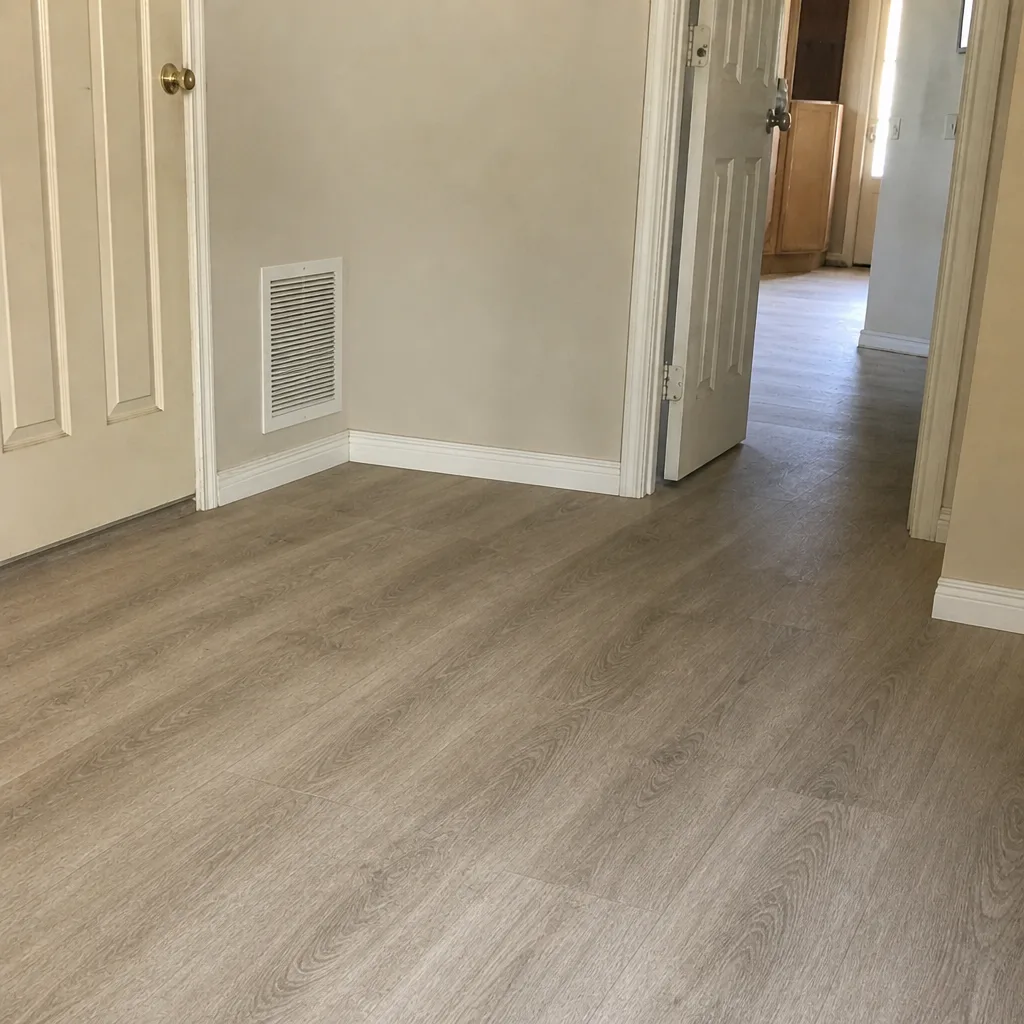 After
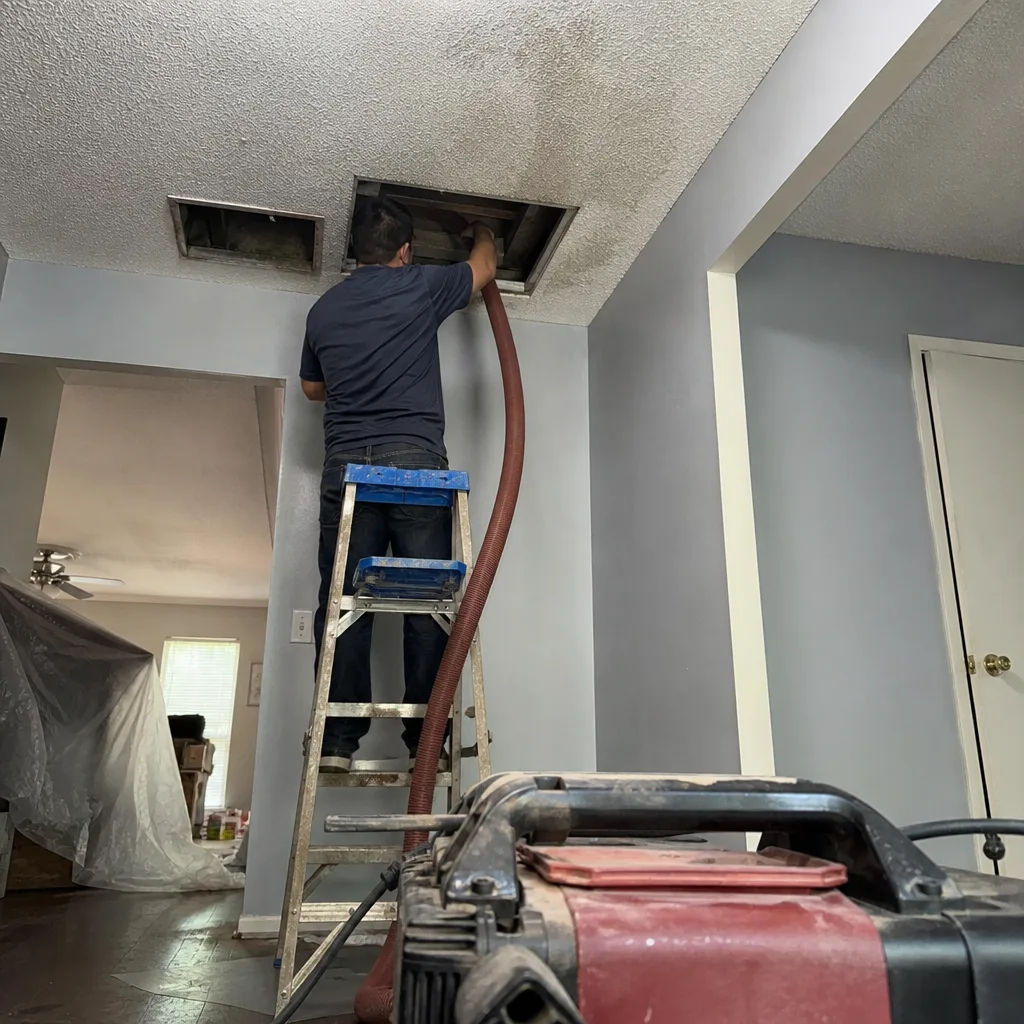 Before
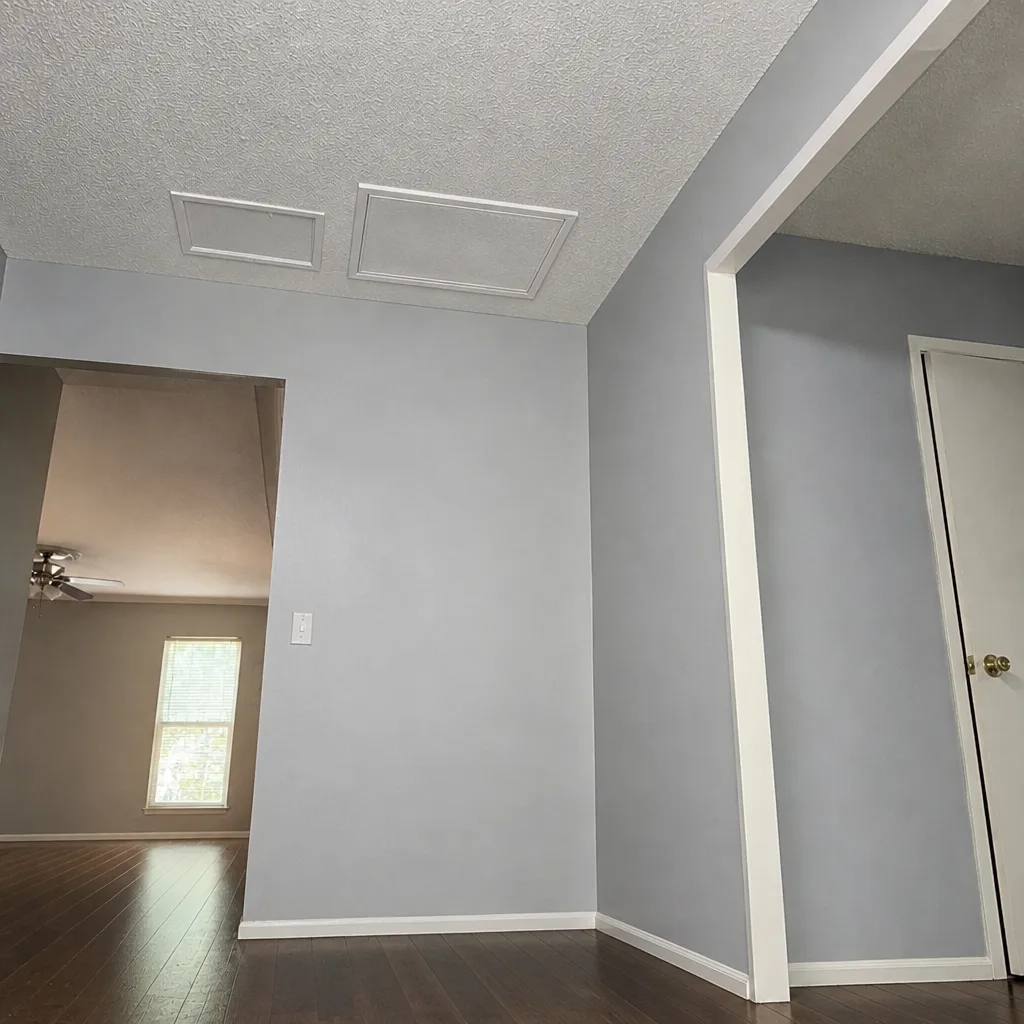 After
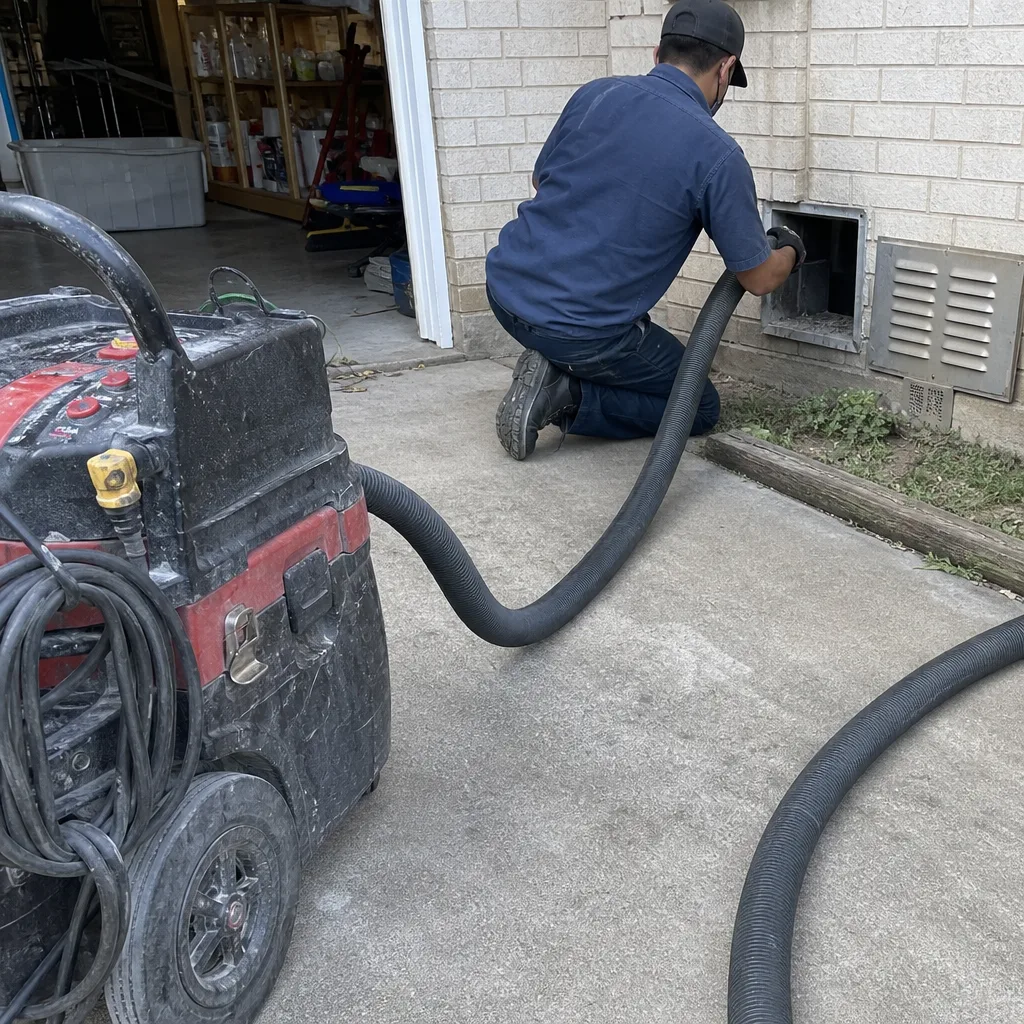 Before
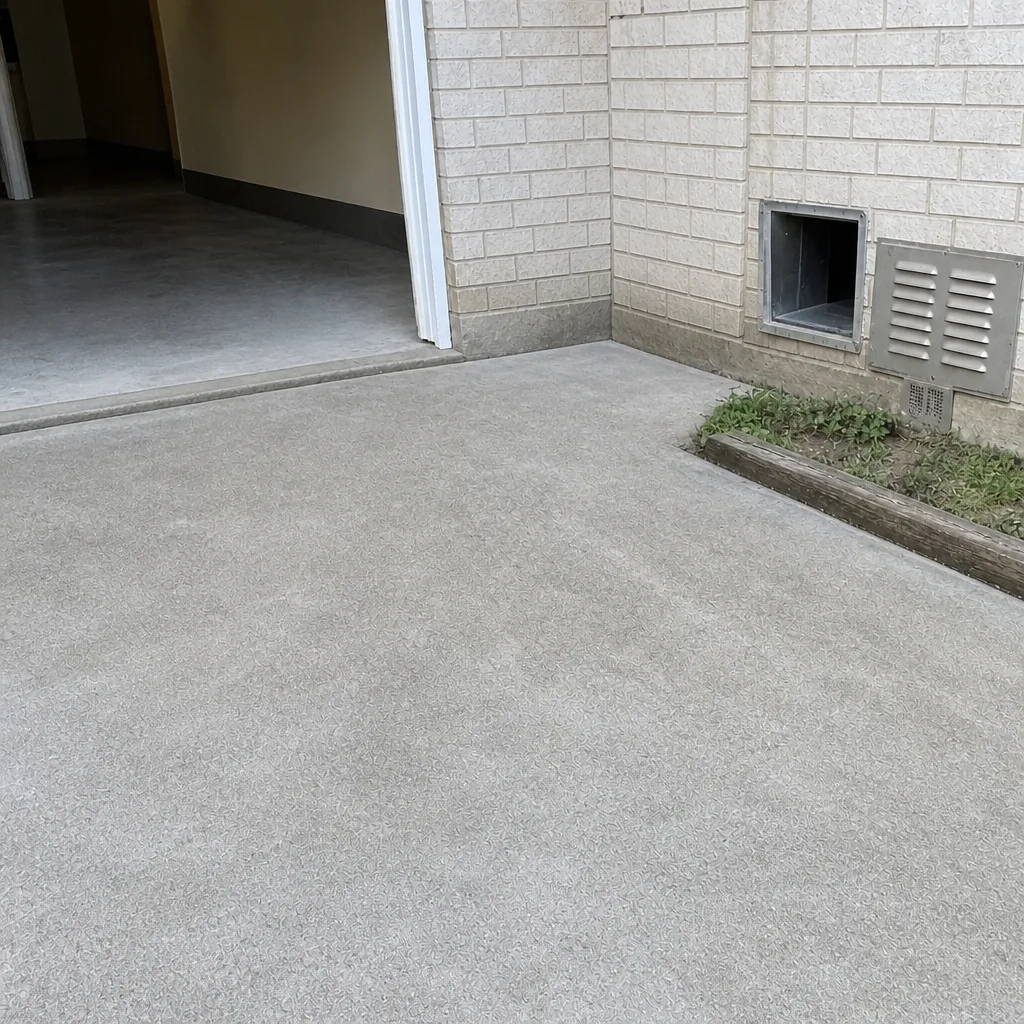 After
When to Call a Professional
Call a professional when you’ve noticed persistent dust settling on surfaces faster than usual, a musty smell that returns shortly after cleaning, or unexplained increases in allergy symptoms while the HVAC is running. Call after a major renovation when drywall dust has had a chance to enter the returns, after moving into a home where the previous owner’s maintenance history is uncertain, or when a new HVAC system was installed without a duct inspection. Call if you hear whistling at a register or if certain rooms never reach temperature – both can indicate a duct defect that cleaning alone can’t fix. And call if your dryer is taking noticeably longer to dry a load or the dryer vent cap outside shows visible lint. Prestige Air Duct offers free estimates in Grand Prairie – call (866) 361-6858. We answer 24/7. Fast dispatch from 7am to 7pm, Sunday through Friday.
Frequently Asked Questions
Whole-system air duct cleaning in Grand Prairie typically ranges from a few hundred dollars to just over a thousand, depending on the number of registers, the length of the trunk runs, and whether repair is involved. The written estimate sets the final price, and you should get it before any work starts. Call (866) 361-6858 for an exact quote – estimates are free.
Cheap quotes are usually cheaper for a reason: light equipment below 2,000 CFM, no inspection step, no return-side cleaning, or no verification afterward. A truck-mount show is not a cleaning. Only one flat price per system agreed before work starts protects against a low headline becoming a bigger invoice once the technician is on site. Call (866) 361-6858 for an honest quote.
You should receive before-and-after photos of the same duct interior from the same angle, plus airflow readings at the registers taken before and after. Those two documents are the standard. If you don’t have them, ask for them. Call (866) 361-6858 if you want a second opinion on a prior job.
Every three to five years is a reasonable baseline for a Grand Prairie home, though heavy shedding pets, ongoing renovation, or a home with exterior returns near ground level can justify more frequent cleaning. The right interval is driven by what the inspection finds, not by a fixed calendar. Call (866) 361-6858 to talk through your situation.
Yes. Clay-based particulate binds with dust and lint more aggressively than the loose, sandy debris found in drier parts of the metroplex, and the humidity through warm months makes that debris cling harder to duct walls. It’s a real difference in what comes out and how much agitation it takes. Call (866) 361-6858 for a walk-through.
Yes. Air duct cleaning and dryer vent cleaning are separate services, priced and scheduled separately, because they’re separate fire-safety and air-quality concerns. Many homeowners book both, but neither requires the other. Call (866) 361-6858 and we’ll scope whichever you need.
Cleaning removes debris from inside the ducts. Repair addresses the structural defects that cause debris to keep entering, such as disconnected runs, torn liners, and leaking joints. They’re distinct services and often both are needed on the same home. Call (866) 361-6858 and we’ll tell you which applies.
No. A scent fogger is often used to mask a musty odor instead of addressing its source, which is usually moisture or a duct leak. If the technician’s first move is a scent, ask what’s causing the smell and whether a repair is needed. Call (866) 361-6858 for a diagnostic visit.
The Bottom Line
Air duct cleaning in Grand Prairie isn’t defined by the coupon price or the size of the truck. It’s defined by the equipment rating, the sequence of work, and the documentation you receive. A real job uses negative-pressure equipment in the 4,000 CFM range, follows inspection, agitation, vacuuming, and verification, cleans supply and return separately, and leaves you with before-and-after photos and airflow readings. Grand Prairie’s clay soil and humid warm months make the local debris profile denser than in drier DFW suburbs, which makes real agitation and proper equipment harder to fake. Add air duct repair when the inspection turns up leaks, and treat dryer vents as the separate fire-safety service they are. If a quote’s missing any of that, you know what to ask. Our technicians have up to 12 years of experience, and we’re glad to walk you through a Grand Prairie home’s system before you commit to anything.
Ready to schedule a documented, equipment-verified cleaning? Call (866) 361-6858 for a free estimate. We answer 24/7. Fast dispatch from 7am to 7pm, Sunday through Friday. One flat price per system agreed before work starts, and before-and-after photos of your own ducts when the job is done.
Written by the team at Prestige Air Duct.