
Last updated November 15, 2026
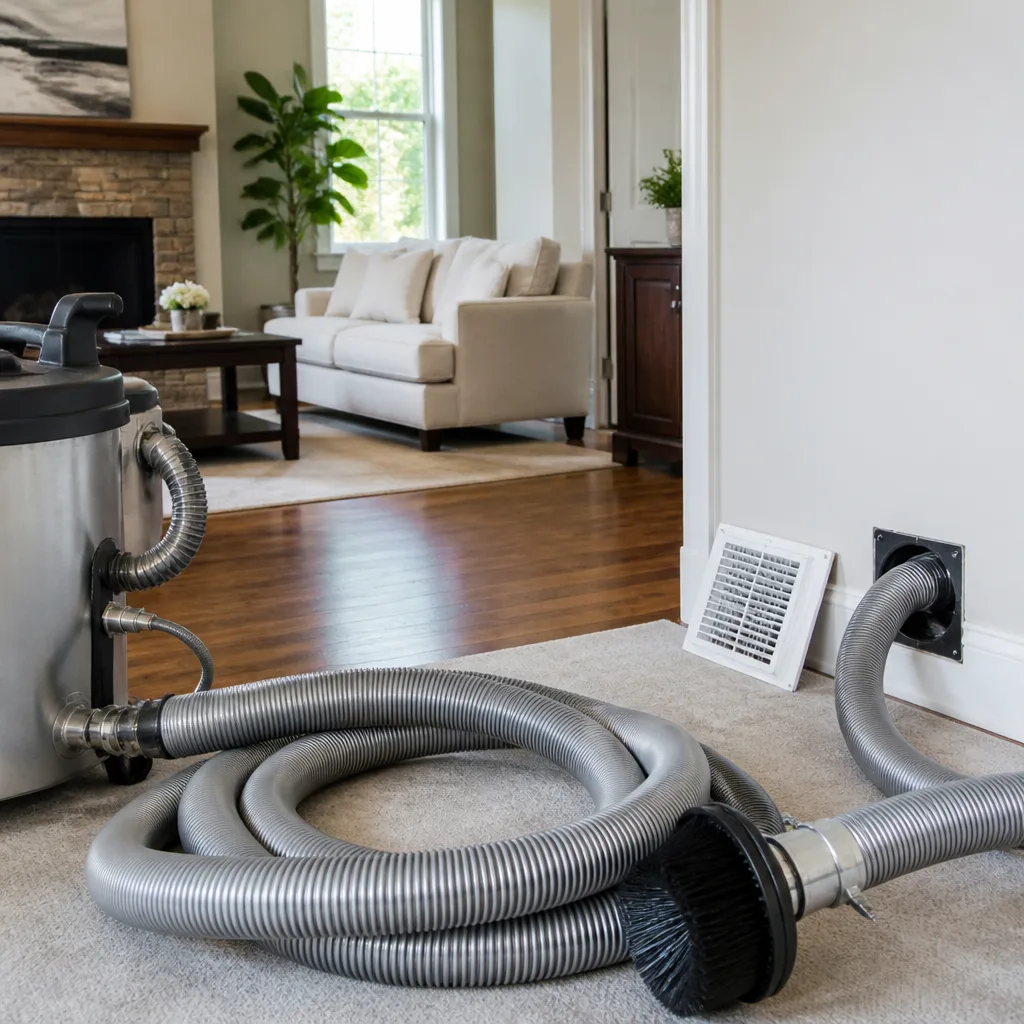 Whole-home duct cleaning
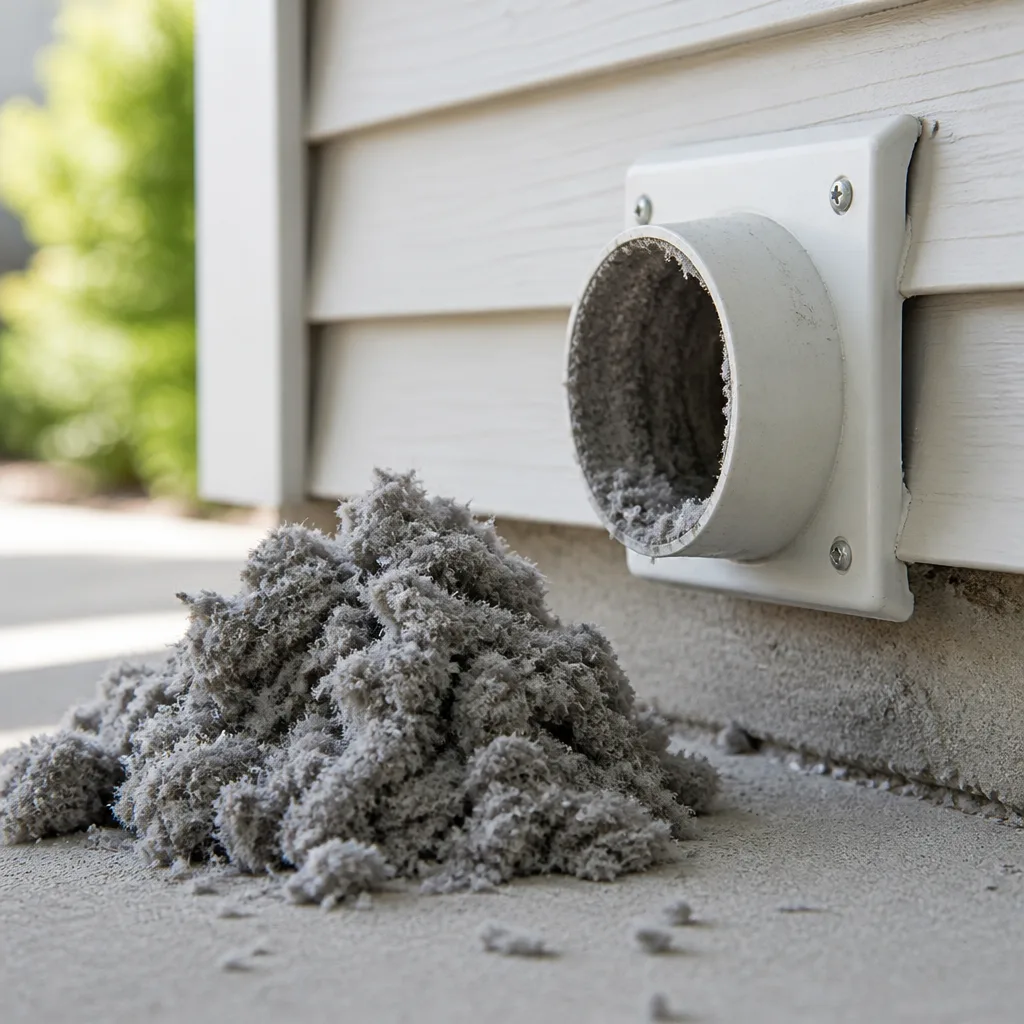 Dryer vent cleaning
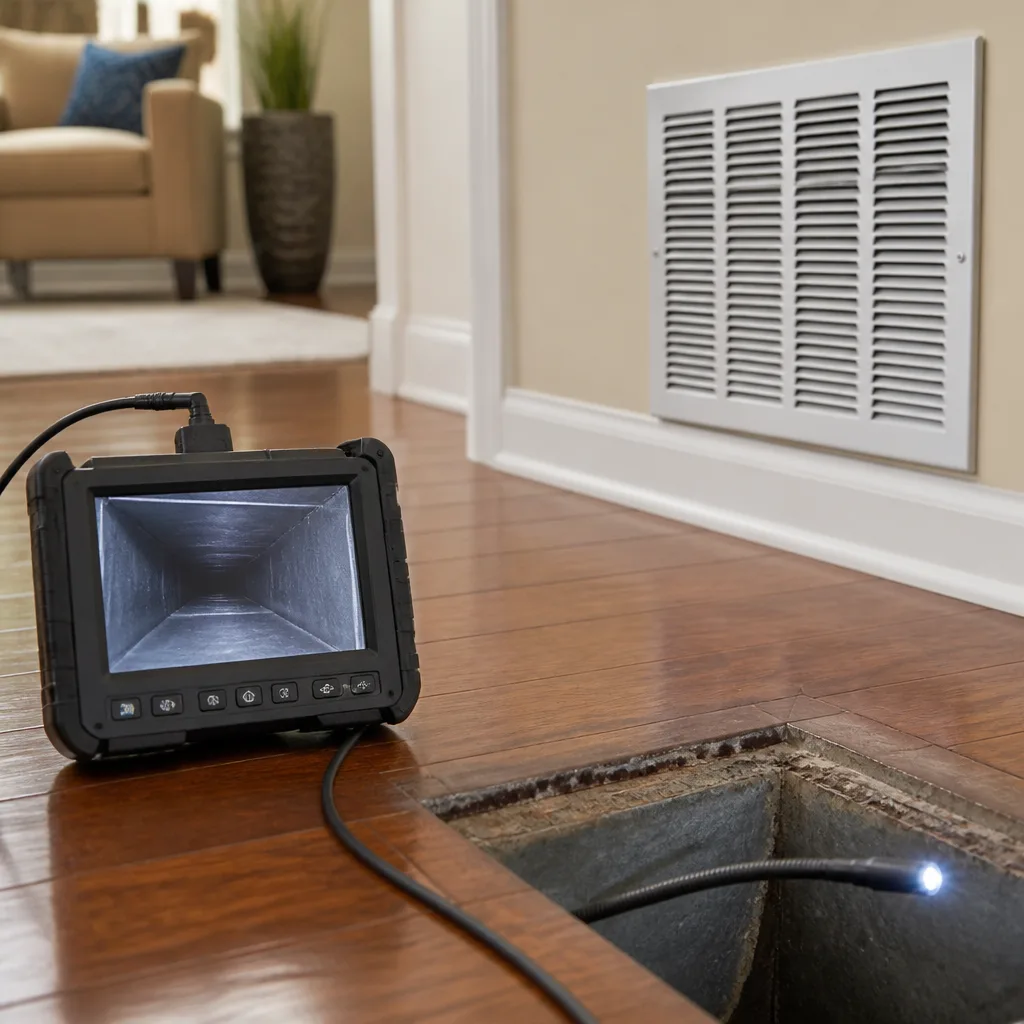 Camera inspection
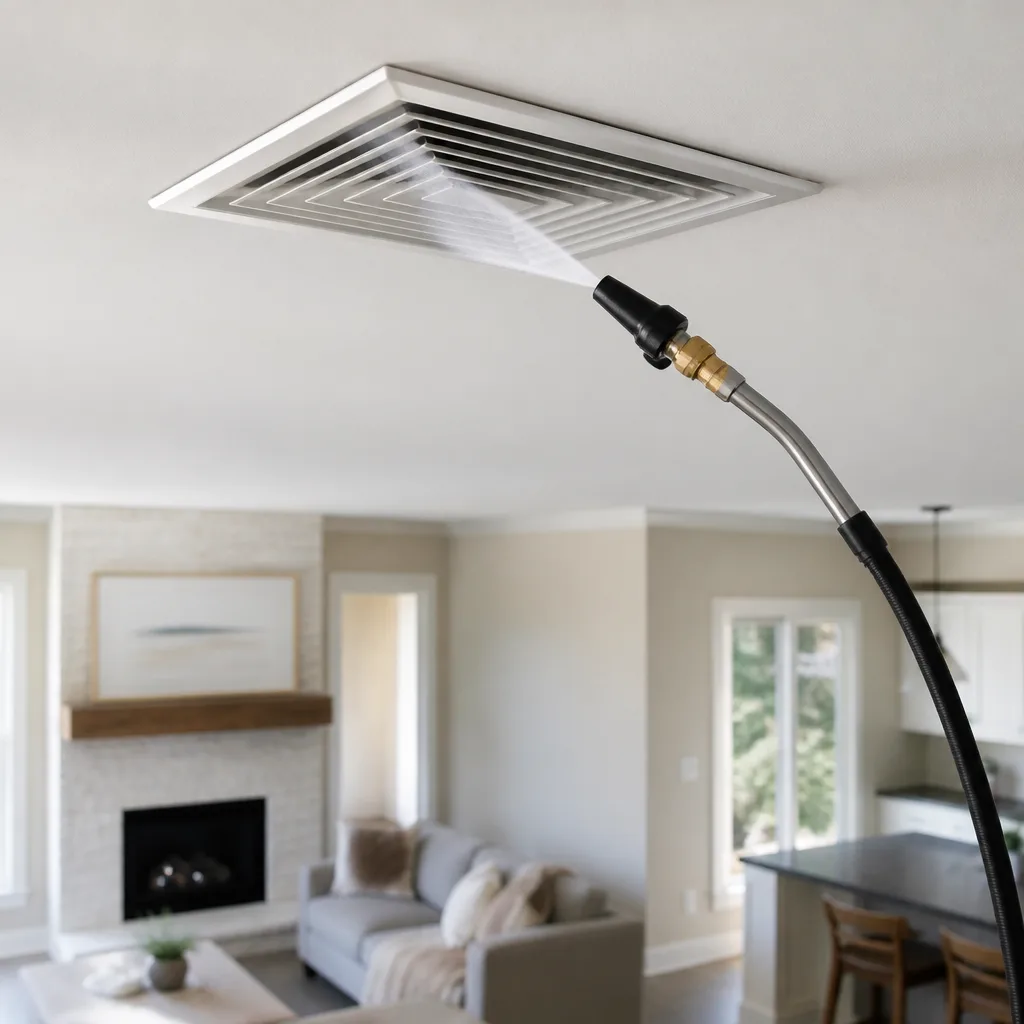 Sanitizing & deodorizing
Whole-system duct and dryer vent check with before-and-after photos - you see exactly what came out of your vents
That "$99 whole-house special" is a bait ad - the real number appears once they are in your hallway, or the "clean" is a shop-vac at the register. We photograph the inside of your ducts before and after instead.
DIY vs Professional Air Duct Cleaning: The Grand Prairie Homeowner’s Decision Guide
Most homeowners who start researching duct cleaning assume the deciding factor is time, money, or willingness to climb a ladder. It isn’t. The deciding factor is airflow. A shop vacuum moves around 150 cubic feet per minute at the hose. A professional duct cleaning rig pulls thousands of cubic feet per minute through the entire system, which is the difference between agitating dust and actually evacuating it from your home. That physical gap shapes every honest answer to the DIY question. In this guide, we’ll walk you through what consumer equipment can and can’t do, what you can legitimately handle yourself in a Grand Prairie home, when DIY attempts make contamination worse, and how to decide which side of the line your house sits on.
Quick Answer
DIY air duct cleaning can handle surface dust near the registers, but it cannot generate the airflow needed to dislodge and extract debris from deep inside the trunk lines and branch runs. For a newer, well-maintained home with a short duct run and light buildup, a homeowner can do meaningful maintenance. For older Grand Prairie homes with flex duct, long runs, or visible dust patterns returning quickly after cleaning, professional equipment is the only way to actually remove contamination rather than redistribute it.
Styles & brands we work with
- Whole-home duct cleaning
- Dryer vent cleaning
- Camera inspection
- Sanitizing & deodorizing
Table of Contents
- Why Airflow Physics Decides the DIY Question
- The Equipment Gap: What Consumer Tools Can and Can’t Do
- What Homeowners Can Legitimately Do Themselves
- When DIY Makes Contamination Worse
- Can a Rental Blower-Vac Close the Gap?
- How Grand Prairie Homes Change the Calculation
- Duct Sealing, Repair, and the Code Question
- Cost-Benefit: When DIY Pays Off and When It Doesn’t
Why Airflow Physics Decides the DIY Question
Air duct cleaning works because of negative pressure. When you connect a high-powered vacuum to a trunk line and seal the registers, the pressure differential inside the duct system pulls debris toward the vacuum source. Debris that has settled and packed against the duct walls has to be loosened by an agitation tool first, then carried by the airflow to an extraction point. Neither step works without enough pressure and volume to move air through the full length of the run.
Three numbers matter:
- CFM (cubic feet per minute): how much air volume moves through the system. Consumer vacuums top out around 150 CFM. Professional truck-mounted and portable rigs move 10,000 to 16,000 CFM.
- Static pressure: the pulling force that lifts debris off duct walls. It drops fast as air travels through long runs and fittings, so a shop vac loses most of its already weak pull within a few feet of the hose tip.
- Agitation: the mechanical action that breaks debris loose. Professional cleaning uses air whips, rotary brushes, and compressed-air tools sized to the duct. Consumer kits usually offer a brush on a flexible rod.
The practical effect is simple. A shop vac placed at a register pulls the loose dust within a foot or two of the opening. The debris sitting in the middle of a 20-foot trunk run doesn’t move. In many cases it stays exactly where it was, now slightly more agitated and more likely to be picked up by normal system airflow and pushed back into your living space. We’re not trying to talk you out of caring about your air quality, but understanding this gap is what makes the DIY versus professional decision honest.
The Equipment Gap: What Consumer Tools Can and Can’t Do
Professional duct cleaning uses equipment built for a specific job. Rotobrush systems, for example, are designed around a rotating brush head on a flexible shaft driven by a high-powered vacuum, so the agitation and extraction happen in the same pass. Nikro and Abatement Technologies equipment follows the same principle: containment, agitation, high-volume extraction, and HEPA filtration, all sized to the airflow of a residential system. When we say “professional-grade equipment, residential care,” that’s the standard we mean.
Here’s the honest comparison:
- Consumer shop vac: 100 to 150 CFM, short hose, limited reach, no HEPA containment. Good for register covers and floor debris.
- Retail duct cleaning kit: brush on a flexible rod, sometimes an air whip attachment. Works for surface dust on short, straight, accessible runs. Cannot generate meaningful pressure through the whole system.
- Rental blower-vac (where available): higher CFM than a shop vac, typically 400 to 700 CFM in a rental-class unit. Good agitation potential, but no containment, no HEPA, and no method for sealing registers to create system-wide negative pressure.
- Professional truck-mount or portable rig: 10,000 to 16,000 CFM, sealed register-to-vacuum setup, HEPA filtration, rotary agitation tools, and containment. Removes what it disturbs.
That last point matters more than any single specification. Professional equipment is built to remove debris from your home, not just rearrange it. Consumer equipment, even at its best, redistributes. That’s a meaningful safety difference in a home where mold, pest debris, or construction dust has settled into the ductwork.
What Homeowners Can Legitimately Do Themselves
Plenty. There’s real value in homeowner-led maintenance, and a good professional will tell you so. The activities that genuinely help your system, without specialized equipment:
- Clean the registers and grilles. Remove the supply and return covers, wash them in a sink with mild soap, dry them fully, and reinstall. This alone reduces visible dust on the first pass of the HVAC cycle.
- Upgrade your air filter correctly. Match filter MERV rating to what your system’s blower can handle (most residential systems do best between MERV 8 and MERV 11), and change it on the interval your system calls for. A too-high MERV can starve airflow.
- Vacuum the return-side opening. With the system off, run a shop vac along the flat surface of the return drop, where dust settles between cleanings.
- Inspect visually. A flashlight and a phone camera can look into accessible duct runs after removing a register. You don’t have to disassemble anything to see whether the inside looks fuzzy, sooty, or full of debris.
- Keep the return and supply areas clear. Furniture pressed against a return grille restricts airflow and pulls more dust through the system.
- Handle dryer vent maintenance. Lint removal from the outside vent flap, plus checking the flexible connector behind the dryer, is legitimate homeowner work and matters for fire safety. dryer vent cleaning as a full-service job is a separate discussion, but the routine lint check is worth doing.
None of this requires professional equipment. All of it makes a difference. The question is where the DIY line ends and the duct cleaning air duct cleaning job begins.
When DIY Makes Contamination Worse
Certain duct configurations turn a DIY effort into a net negative. Not because the homeowner did something wrong, but because the equipment wasn’t matched to the duct material or the condition. In our experience across Grand Prairie homes, the following scenarios are where DIY attempts tend to backfire:
- Older flex duct with a sagging or kinked run. Flex duct interior is a thin plastic liner over a wire coil. Brushes and consumer wands catch on the wire, and a puncture creates a leak that pulls attic air (and Texas heat) directly into your supply. Once that liner is torn, it isn’t coming back.
- Duct board (rigid fiberglass) runs. The interior surface of duct board is friable. Aggressive brushing done by hand sheds fiberglass particles into the airstream, which then flow into your home.
- Return plenums with heavy settled debris. A shop vac can agitate set dust into the air without capturing it, especially without HEPA containment.
- Systems with visible mold or pest evidence. Disturbing mold colonies without proper containment and HEPA filtration sends spores into the living space. This is a job for a professional, plain and simple.
- Systems with a disconnected or collapsed branch. Cleaning without repair doesn’t fix the underlying leak. Dust returns within weeks, and the homeowner concludes “cleaning doesn’t work.” It does. The duct just needs to be sealed.
If any of these describe your system, the calculation flips. DIY dust agitation in a compromised duct is a genuine indoor-air-quality risk. That’s when we recommend a professional inspection first, and let the inspection determine whether cleaning is even the right starting point.
Can a Rental Blower-Vac Close the Gap?
A rental blower-vac can close part of the gap, but only in a narrow set of circumstances. Where blower-vac rentals exist (usually through tool rental yards, and availability varies by market), the units deliver somewhere between 400 and 700 CFM. That’s meaningfully more than a shop vac and enough to clear loose surface dust through a short, straight run. It’s still less than 5 percent of a professional rig’s airflow, so the physics has not changed.
Here’s the calculation we’d use:
- Age of home and duct material. Under 10 years old with rigid metal or well-installed flex duct? Rental blower-vac can handle surface cleaning. Over 20 years, or original equipment, or duct board? Skip it.
- Length of the longest run. If every branch is under 15 feet from the plenum with few fittings, a rental unit can help. If you have a two-story house with a long trunk line, forget it.
- Filter-to-duct chain. If filters are changed on schedule and registers are clean, the only thing left is light surface dust. That’s the rental blower-vac’s lane.
- Visible evidence of heavier contamination. If you see dust plumes when the system kicks on, or debris is visible inside a register boot, a rental unit is likely to make things worse, not better.
- Containment. A rental unit without HEPA and register-sealing will redistribute dust into your home. If containment isn’t part of the setup, the equation doesn’t work.
Bottom line on the rental route: it’s a legitimate option for a light-maintenance pass on a newer system with short runs and disciplined filter habits. It is not a substitute for professional service on any duct system with visible contamination, age, or material concerns.
How Grand Prairie Homes Change the Calculation
Grand Prairie sits where Dallas and Tarrant counties meet, and the housing stock reflects that layering. Older neighborhoods near the historic downtown core include homes built across several decades, with duct systems that have seen multiple HVAC replacements. Newer development along the I-20 corridor and neighborhoods like Westchester, Lake Ridge, and the Dalworth Park area includes homes in the ten- to twenty-year range where the original flex duct is now the deciding factor.
A few Grand Prairie-specific conditions tilt the calculation:
- Summer heat cycling. The system runs hard from May through September. Airflow volume through the ducts is high for months on end, which accelerates both debris settling and the return of dust after a clean. If you clean and the ducts are dirty again in a month, the cause is usually air leakage at joints, not a bad cleaning.
- New construction dust. Some Grand Prairie neighborhoods have cycled through a build-and-sell wave over the past two decades. Homes that saw a remodel in the last five years often still carry drywall dust and construction debris in the return plenum, and it’s not coming out without professional equipment.
- Pollen and insect activity. North Texas pollen loads and the occasional roach or rodent intrusion into attic duct runs mean the contamination profile here isn’t just household dust. Professional inspection with a camera catches these before they become a cleaning problem.
- Attic duct runs. Most single-family homes here route ductwork through the attic. That layout exposes joints and seams to big swings between daytime heat and evening cool, and small leaks at the joints tend to widen over time. If you’re in a Grand Prairie home with attic ductwork, air duct repair is worth considering as a companion to cleaning.
That last point is the one most homeowners miss. Cleaning without repairing a leaking joint or a collapsed flex run is a maintenance cycle that repeats indefinitely. The Prestige Air Duct standard includes a check for those failure points as part of the process, because “we repair what others just clean around” isn’t a slogan, it’s the answer to why a duct cleaning sometimes doesn’t solve the dust problem.
Duct Sealing, Repair, and the Code Question
Air duct cleaning and air duct repair sit on opposite sides of the DIY line. Cleaning involves equipment and technique. Repair involves disassembly, sealing, and code-relevant workmanship. Texas residential codes generally require duct systems to be substantially leak-free, and major flex duct concerns (crushed runs, disconnected boots, sagging trunk) are exactly the kind of repair that a trained technician handles properly. The specific permit requirements vary by project, so check with your city’s building department before starting anything structural.
What a professional air duct repair actually covers:
- Identifying the source of dust return. Visual inspection plus camera work in the duct runs, plus a system static-pressure check if needed.
- Sealing failed joints. Mastic or UL-listed tape at seams, plenum joints, and boots, applied correctly so the seal lasts.
- Replacing crushed or disconnected flex. Installing new, correctly sized flex duct where the existing run has failed.
- Repairing duct board and metal trunk damage. While keeping the duct system’s thermal and airtight integrity intact.
- Verifying the repair. Post-repair airflow check to confirm the branch is delivering what it should.
None of this is homeowner work. A shop vac and a roll of foil tape won’t fix a collapsed flex run, and they absolutely cannot restore a duct board system that’s shedding fiberglass. If cleaning reveals damage, repair is the only path forward. Partnering with Aprilaire and Honeywell air-quality product lines means we can also fold filtration and humidity control into the system once the ducts are sound, which is often the missing piece in a Grand Prairie home’s indoor-air picture.
Cost-Benefit: When DIY Pays Off and When It Doesn’t
Pricing for professional duct cleaning varies with the size of the home, the number of registers, the condition of the system, and whether repair is involved. Estimates in the Grand Prairie market typically fall into whole-job ranges rather than per-vent pricing, and the honest ones are set by the written estimate before any work starts. For a smaller, newer home with light maintenance needs, the numbers can be reasonable. For a larger older home with visible contamination and multiple long runs, the range reflects the work.
The way to think about it:
DIY pays off when: The home is newer (< 15 years), ducts are metal or well-installed flex, registers are clean, filters are maintained, and there's no visible contamination beyond surface dust. Do the register cleaning, filter upgrades, and visual inspections yourself. Your time is well-spent.
Professional pays off when: Any single condition below applies: visible dust plumes from registers, older duct material, duct board, prior pest activity, mold suspicion, a new remodel, persistent allergy or asthma symptoms indoors, or a design that makes the system hard to inspect. In those cases, DIY agitation is either ineffective or actively counterproductive.
The middle ground: A newer home with moderately dirty ducts can benefit from a one-time professional cleaning and then years of homeowner-led maintenance. That’s the ideal end-state for a home: a clean baseline you can maintain, rather than a repeating cleaning cycle.
We don’t sell a maintenance plan because we don’t think you need one to live in a clean house. We sell documented cleaning. Before-and-after photos of your own ducts, whole-system pricing, and, when needed, an honest conversation about repair. Documentation is also why we use equipment from Nikro, Abatement Technologies, and Rotobrush: not because a brand name sells, but because camera-verified cleaning is easier to verify when the tools were built to be verified.
Common Mistakes to Avoid
- Buying the $50 DIY duct cleaning kit and expecting results. The brush-on-a-rod attachment can loosen surface dust on a short, straight run, but it cannot generate the airflow to evacuate it. You’ll get slightly cleaner ducts and then see the dust return.
- Dragging a shop vac through a flex run. The hose catches on the plastic liner and tears it. A torn liner pushes attic heat and dust into your living space, which is a larger problem than the debris you were trying to remove.
- Blaming the cleaner when dust returns. In Grand Prairie, dust that returns within weeks almost always means a leaking joint or a collapsed flex run. Repair, not repeated cleaning, is the fix.
- Ignoring the return plenum. Most DIY dust ends up collecting here first. If you’ve never looked at the return drop, start there before buying any tool.
- Using the wrong MERV filter to compensate. Cranking up to MERV 13 without checking your blower’s capacity starves airflow, and lowers the amount of air the ducts can carry, which makes everything worse.
- Forgetting the dryer vent entirely. A clogged dryer vent is a fire-safety issue, not just a machine-efficiency issue. Check the outside flap and the flexible connector behind the dryer, and remember that proper dryer vent cleaning requires tools and containment that go beyond a homeowner’s reach.
- Cleaning without documenting. If a cleaning happens without before-and-after photos, there’s no proof of work, which makes future decisions harder. Ask for documentation every time.
See the difference
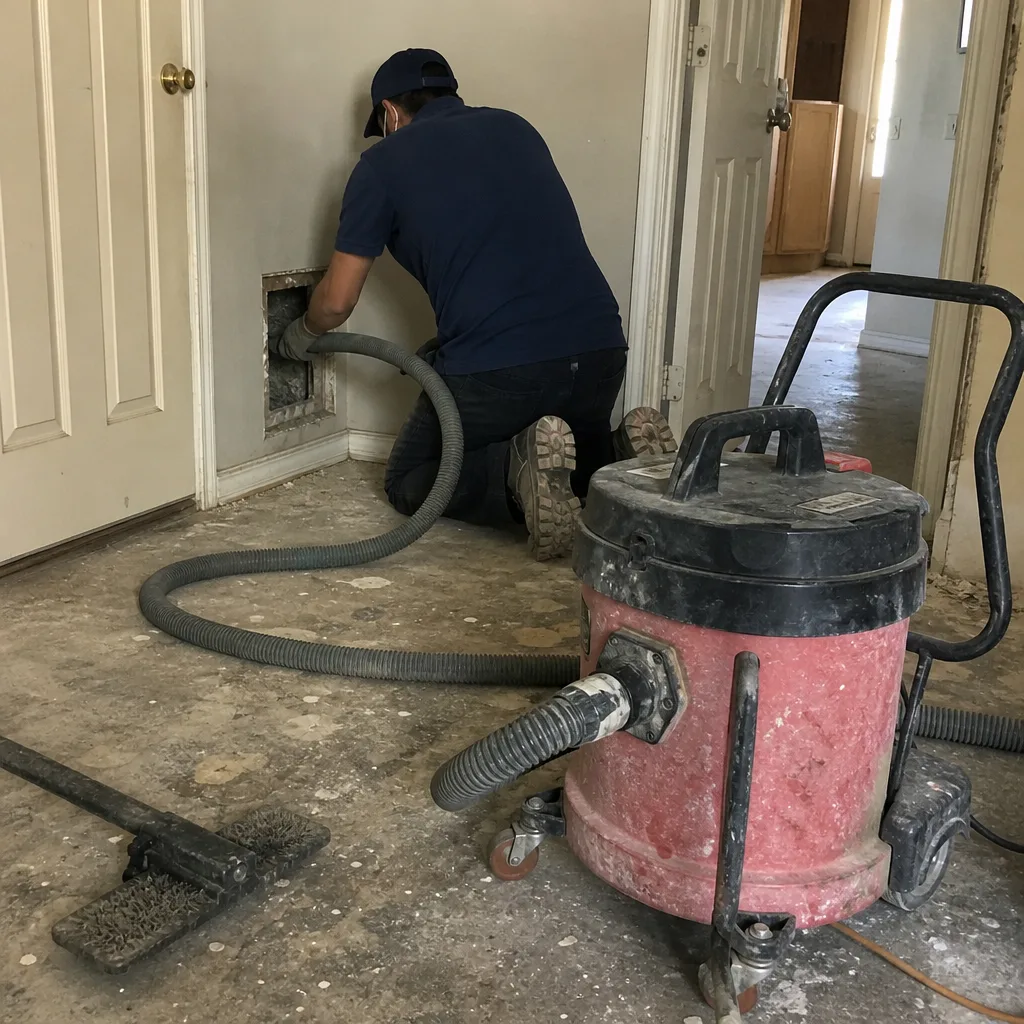 Before
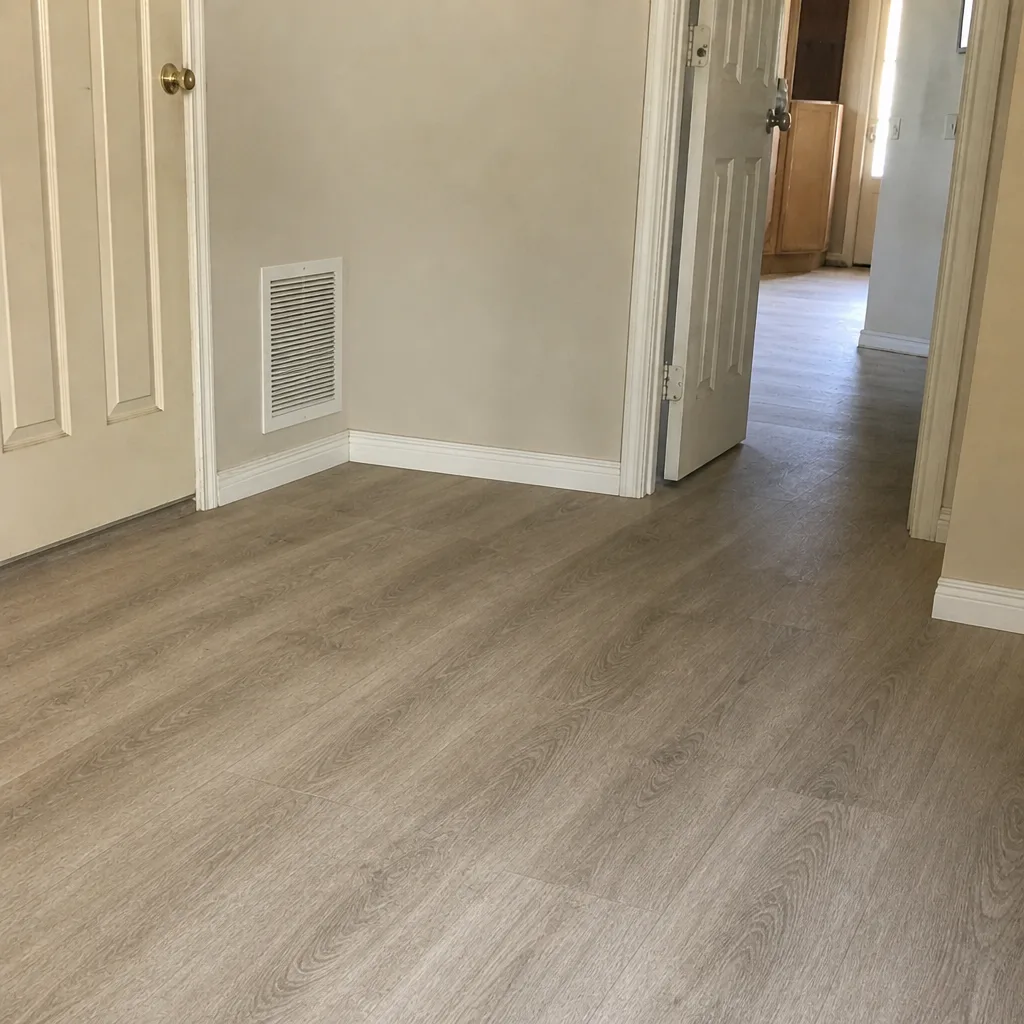 After
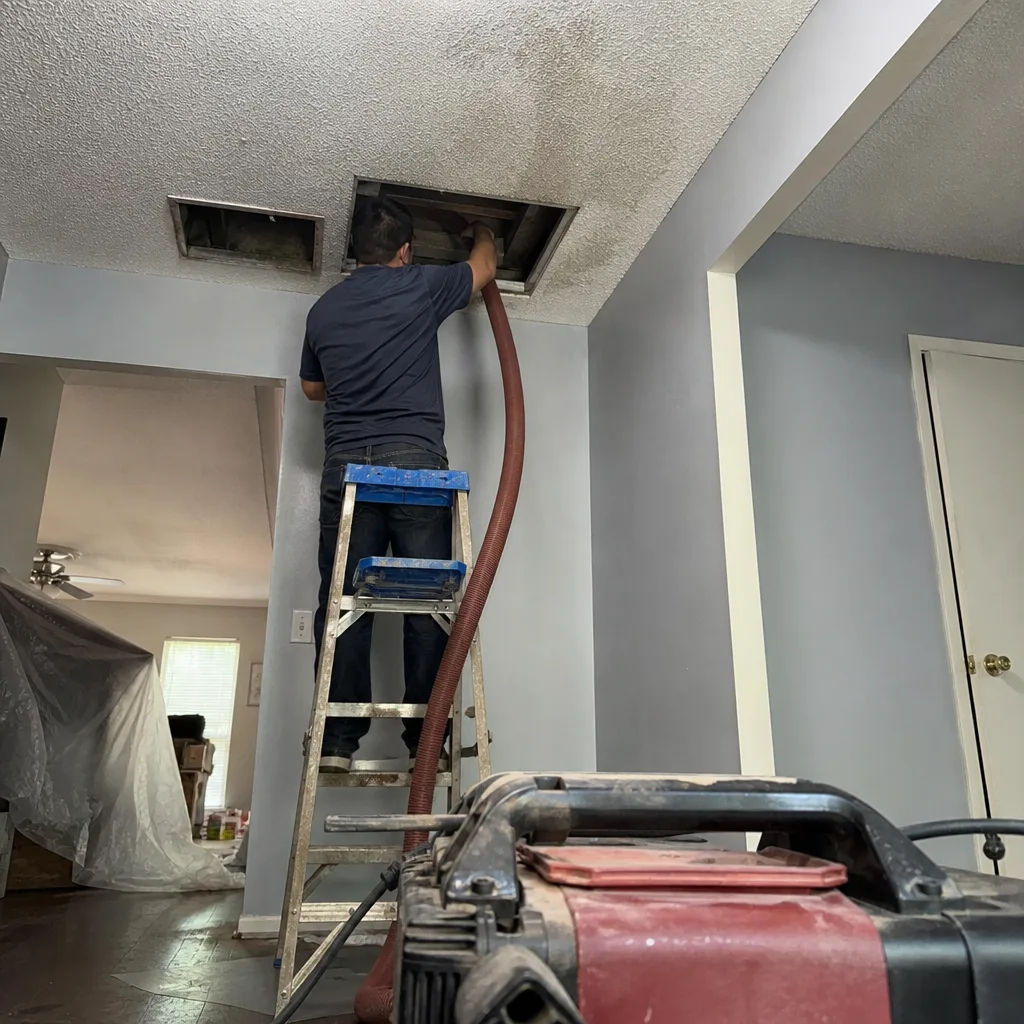 Before
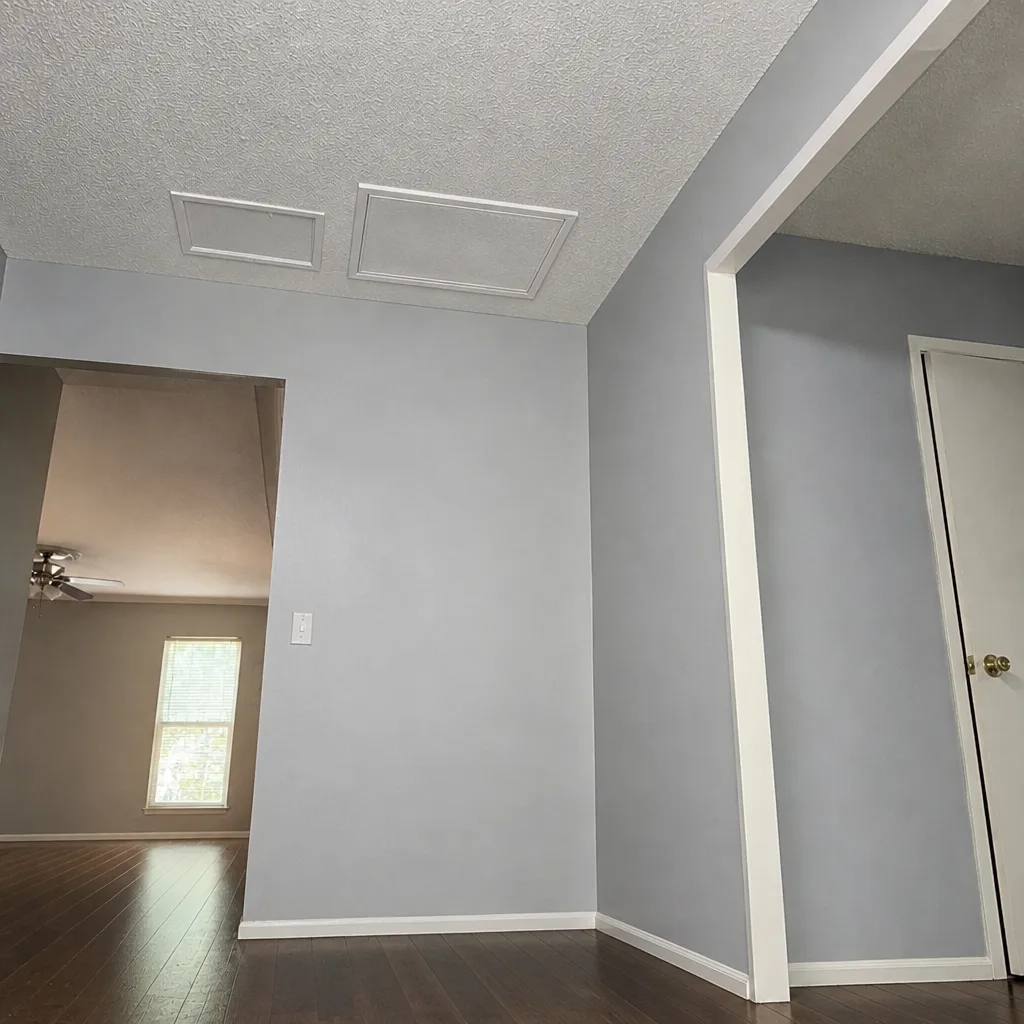 After
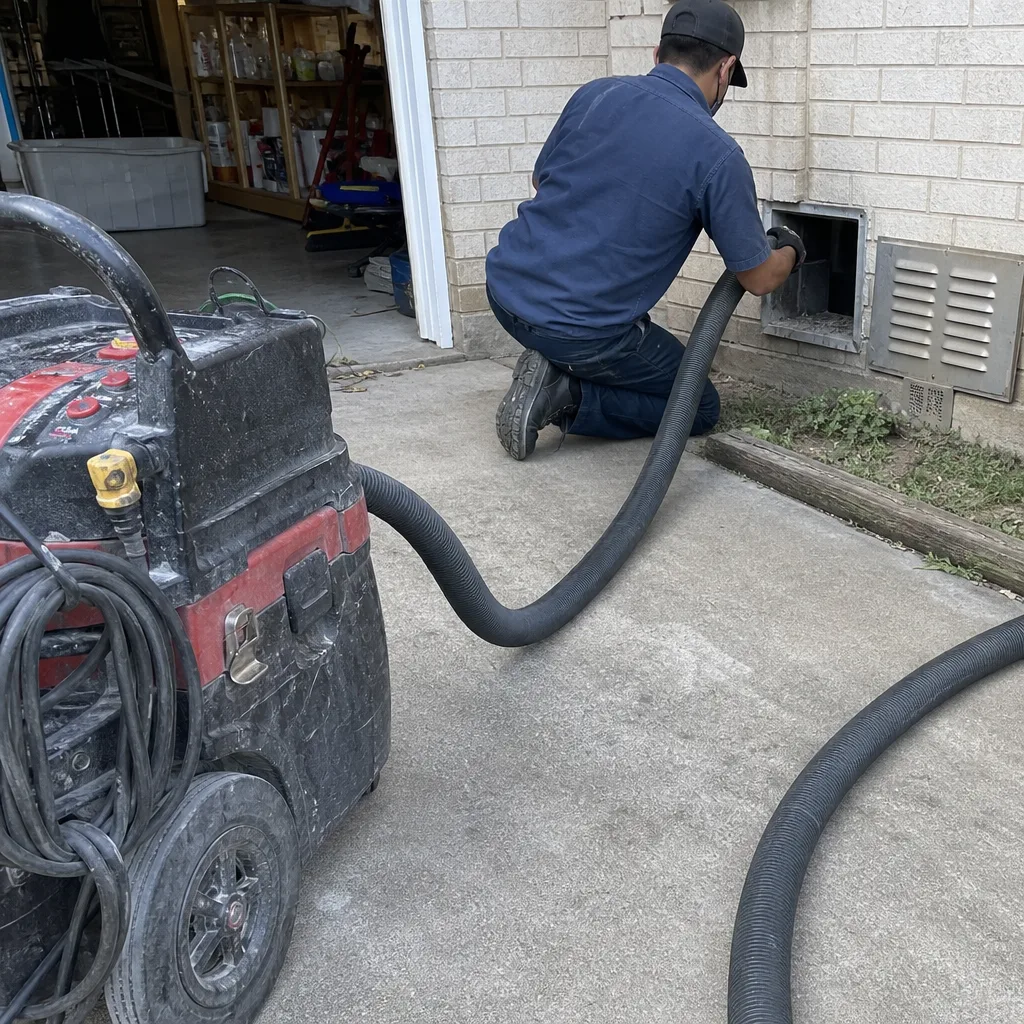 Before
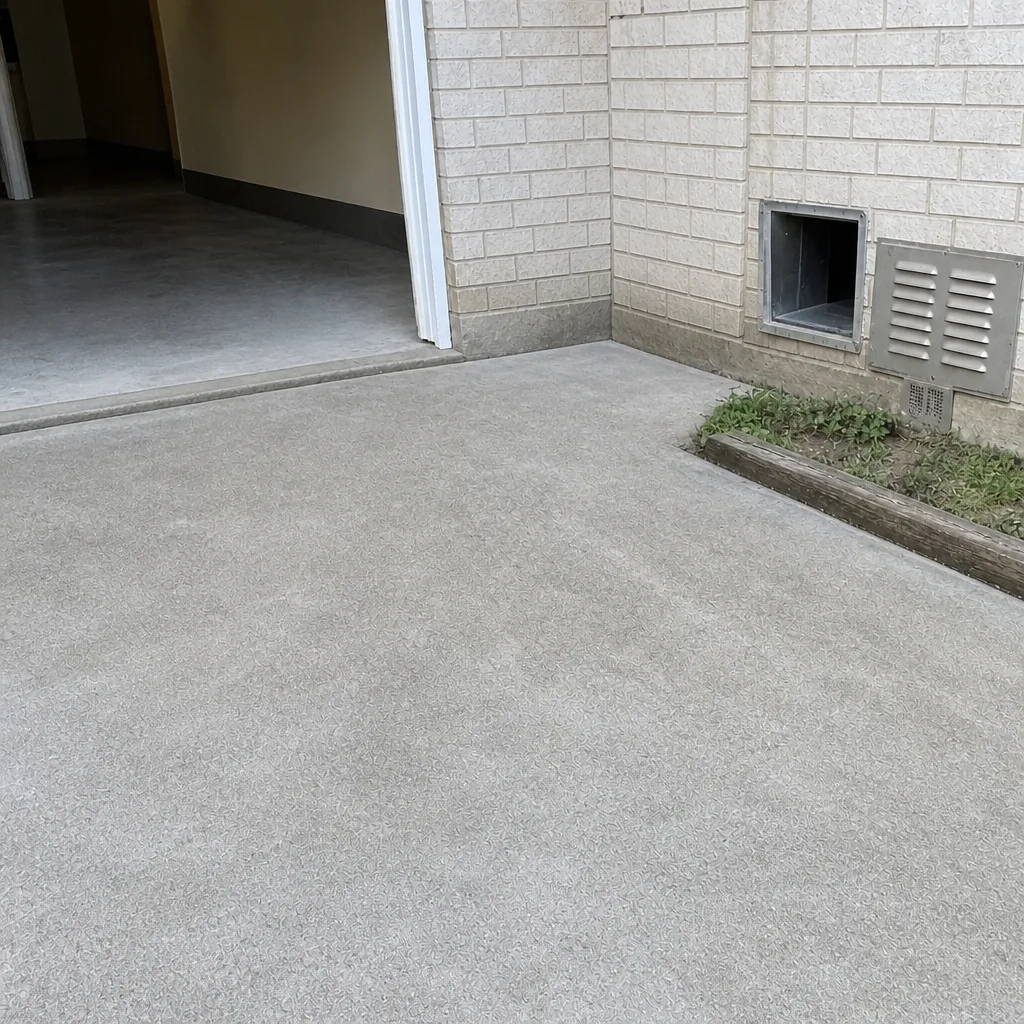 After
When to Call a Professional
Call a professional when your system shows any of the following: dust plumes out of registers when the HVAC kicks on, visible debris inside a return boot, flex duct that looks crushed or disconnected, a home within five years of a major remodel, prior pest activity in the attic or crawl space, or indoor allergy symptoms that don’t resolve with filter changes. Call us as well if you’ve never had a documented cleaning and want a real baseline for your Grand Prairie home. Prestige Air Duct offers free estimates in Grand Prairie. Call (866) 361-6858. We answer 24/7. Fast dispatch from 7am to 7pm, Sunday through Friday. Every job is priced by a written estimate before work starts, and every clean includes before-and-after photos of your own ducts.
Frequently Asked Questions
Whole-system air duct cleaning in Grand Prairie typically prices as a single job estimate for the entire system rather than per vent, and the price is locked by the written estimate before any work begins. The factors that move the number are home size, number of registers and returns, system condition, and whether air duct repair is needed alongside the cleaning. Call (866) 361-6858 for an exact quote. Estimates are free, and we answer 24/7.
Cheap quotes usually reflect one of three things: consumer-grade equipment that can’t generate real negative pressure, per-vent pricing that starts low and grows once the technician is on site, or a visual-only inspection with no documentation. A defensible quote prices the whole system, uses professional-grade equipment (Rotobrush, Nikro, Abatement Technologies), and includes before-and-after photos. If a quote doesn’t include those three things, the number on the paper isn’t the price you’ll pay.
Ask for before-and-after photos of your own ducts, not stock images. A professional clean documents what was extracted and from where. Camera inspection plus photographic records are the standard for verifying that the work happened and produced a measurable result. If a company can’t produce those, walk away.
Most homes need professional cleaning every three to five years, and well-maintained homes with disciplined filter habits can go longer. If you’ve recently remodeled, had pest activity, or moved into a home without prior cleaning records, do it sooner. If dust returns within a few weeks of cleaning, the cause is air leakage or a disconnection, and duct repair is what’s needed.
Yes, mostly through flex duct liner punctures, duct board shedding from aggressive brushing, and shop vac agitation that spreads settled dust without HEPA containment. Homes with older flex duct or fiberglass duct board are the highest risk. If you’re not sure which duct material you have, have a professional inspect it before attempting any cleaning yourself.
The long cooling season and heavy pollen load often push the cleaning interval toward the every-three-year end rather than every five. Attic duct runs in most Grand Prairie homes are also more likely to have small joint leaks that widen over time, which brings more attic air into the system and accelerates dust accumulation. A professional inspection in a Grand Prairie home catches these joints before a cleaning becomes a repeated project.
The Bottom Line
The DIY versus professional answer comes down to what your duct system physically allows. Consumer tools can handle register cleaning, filter upgrades, visual inspections, and routine dryer-vent lint checks. Those are legitimate homeowner jobs and a professional will tell you so. What consumer equipment cannot do is generate the airflow to dislodge and evacuate settled debris from the trunk lines and longer branch runs, and in homes with older flex duct, duct board, or visible contamination, DIY attempts make things worse rather than better. For a newer, well-maintained Grand Prairie home, the DIY lane is reasonable and we’d rather teach it than sell against it. For everything else, professional equipment, camera verification, and a written whole-system estimate are what actually get your ducts clean. Our technicians have up to 12 years of experience, and every job we take on is documented, equipment-verified cleaning. If you’re not sure which side of the line your home sits on, we’ll help you figure it out.
Call (866) 361-6858 for a free estimate. We answer 24/7. Fast dispatch from 7am to 7pm, Sunday through Friday. Learn more about Grand Prairie service and how the written estimate protects you before any work starts.
Written by the team at Prestige Air Duct.