
Last updated November 15, 2026
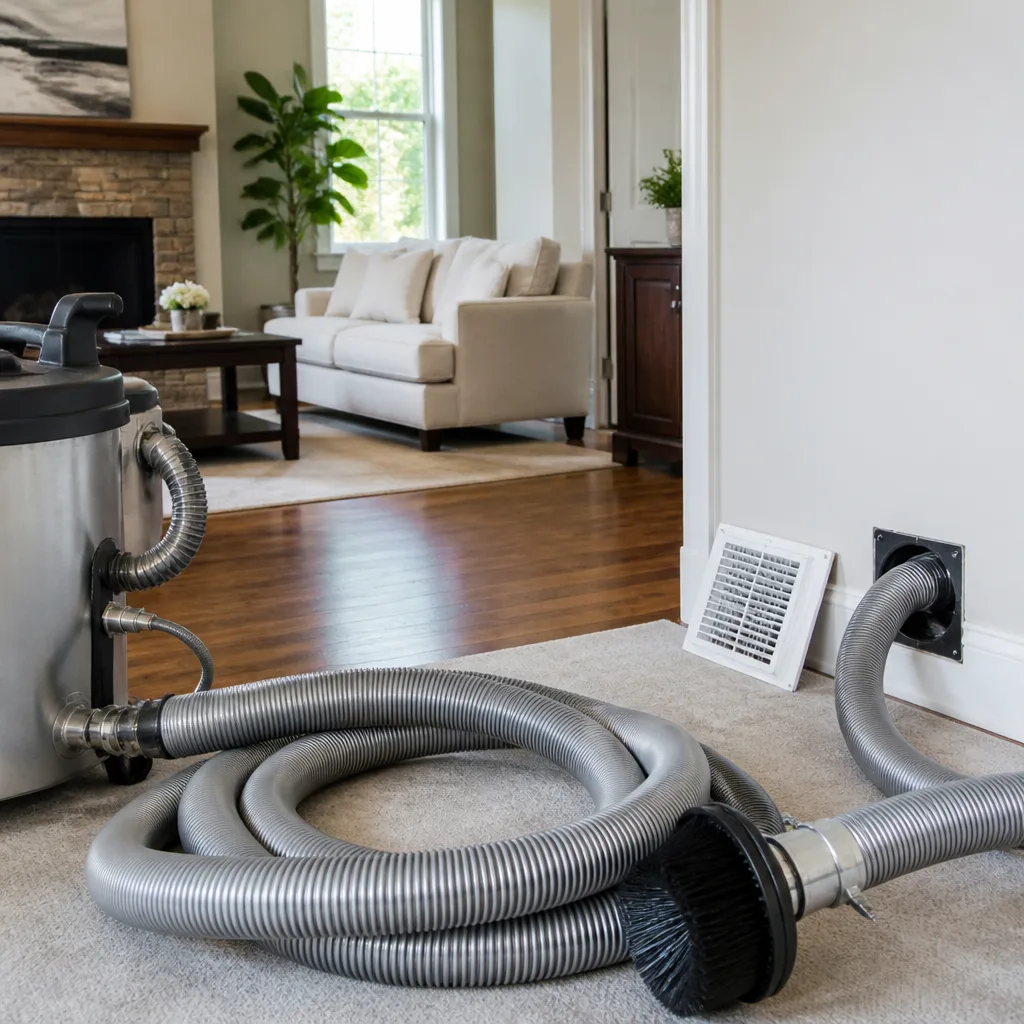 Whole-home duct cleaning
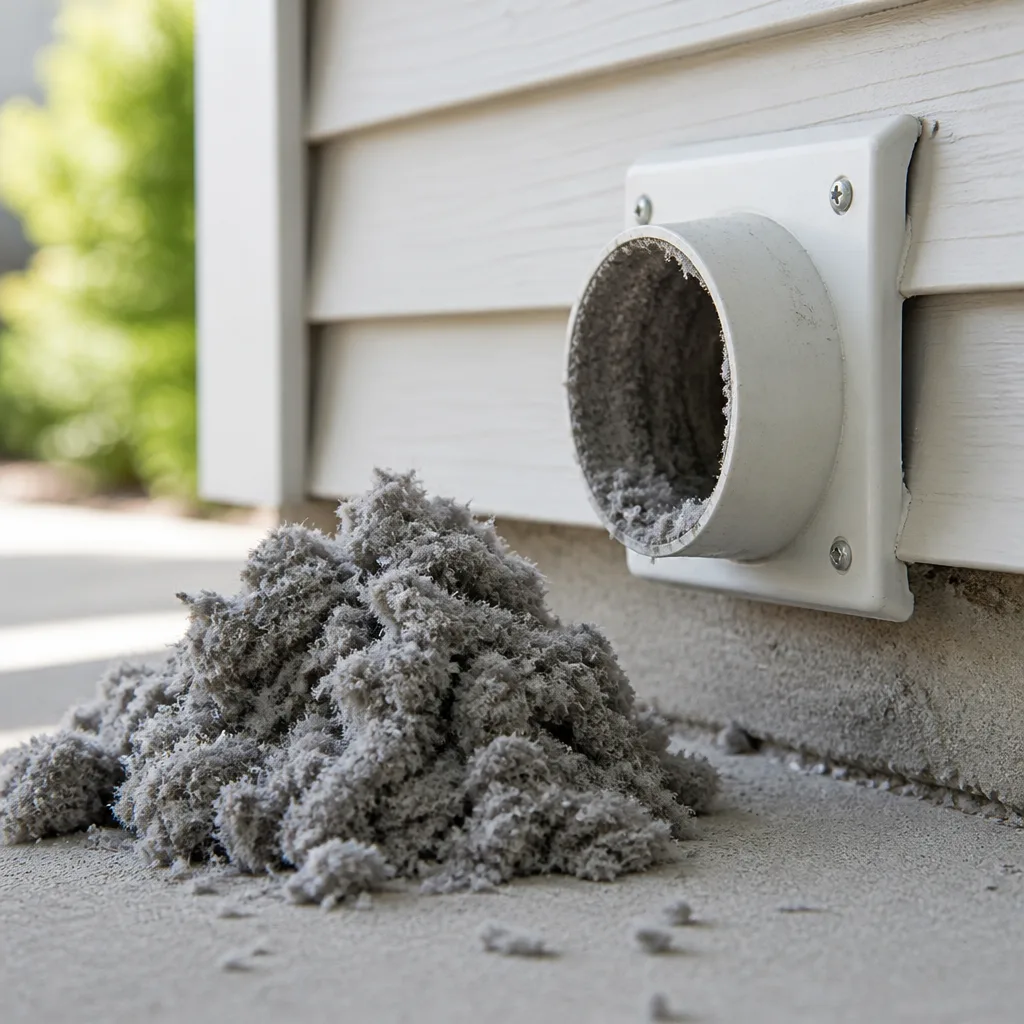 Dryer vent cleaning
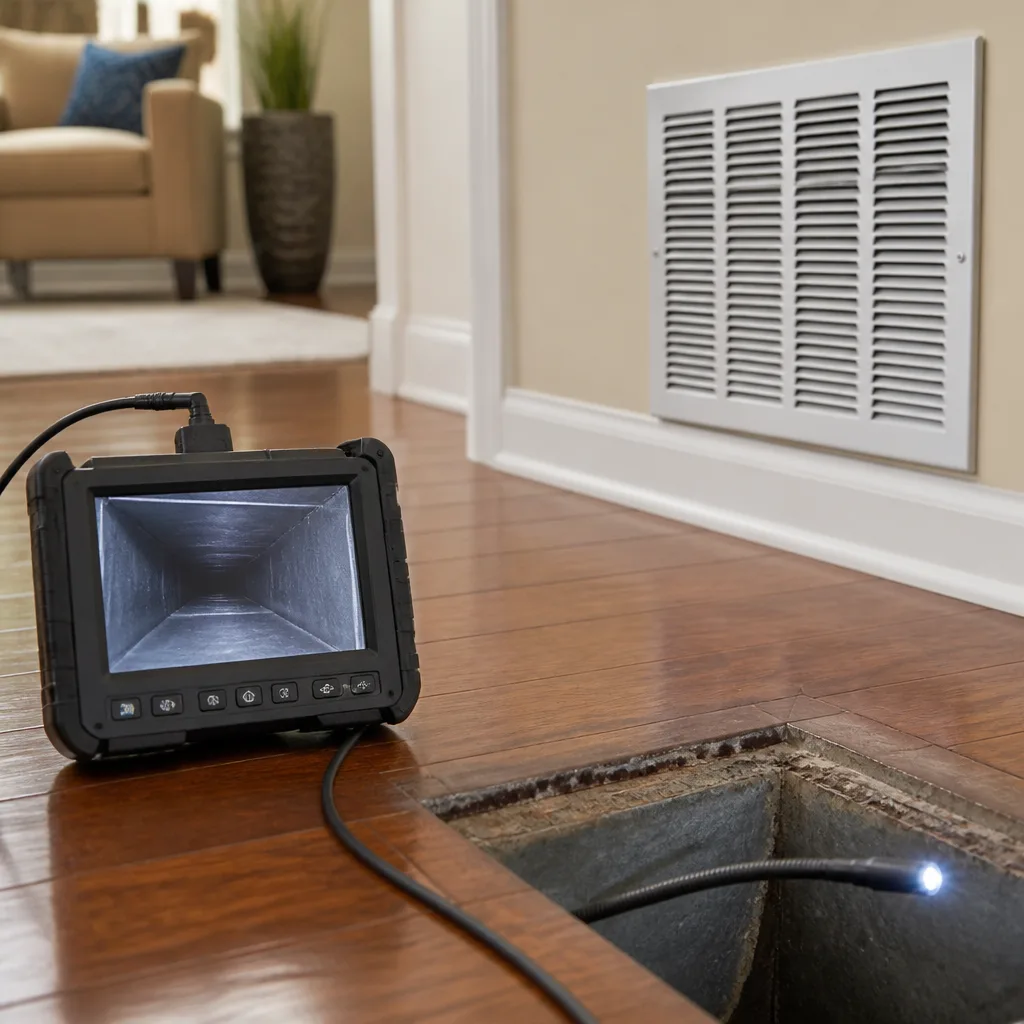 Camera inspection
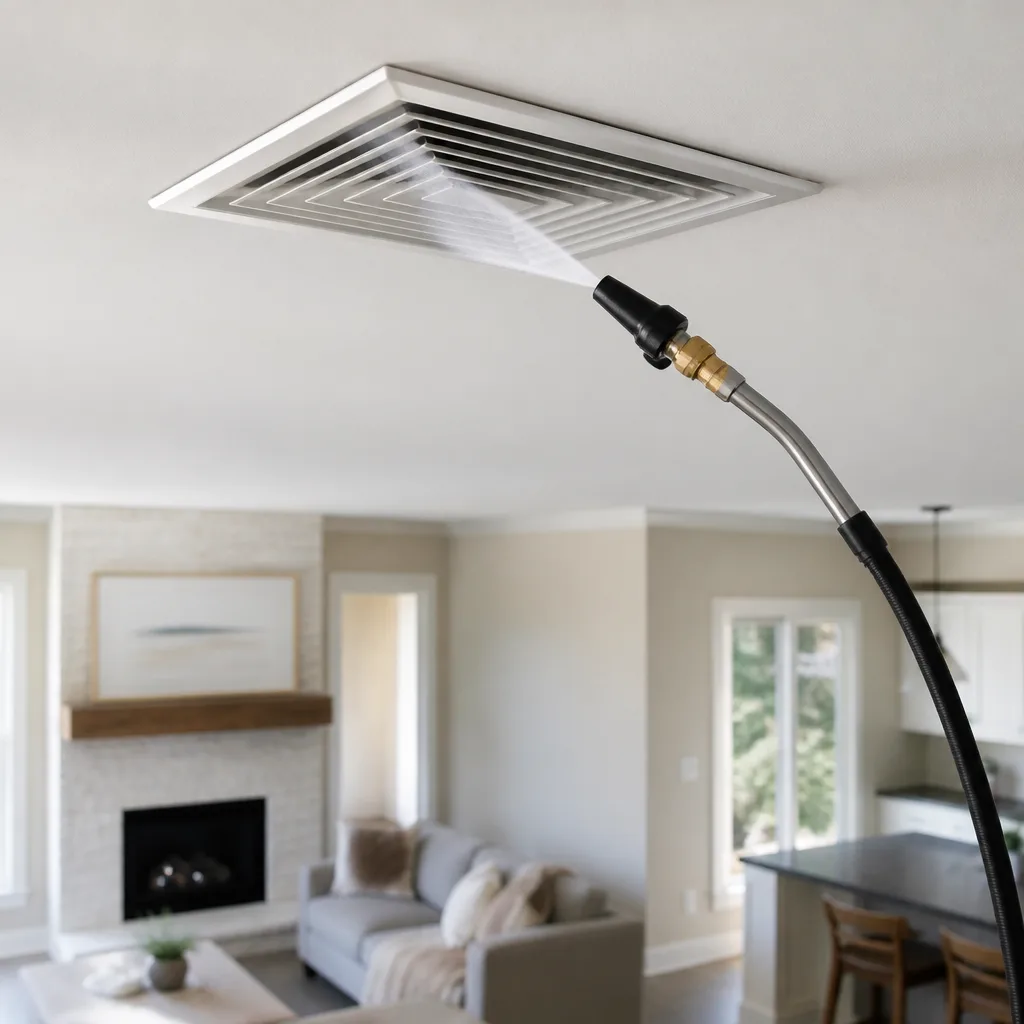 Sanitizing & deodorizing
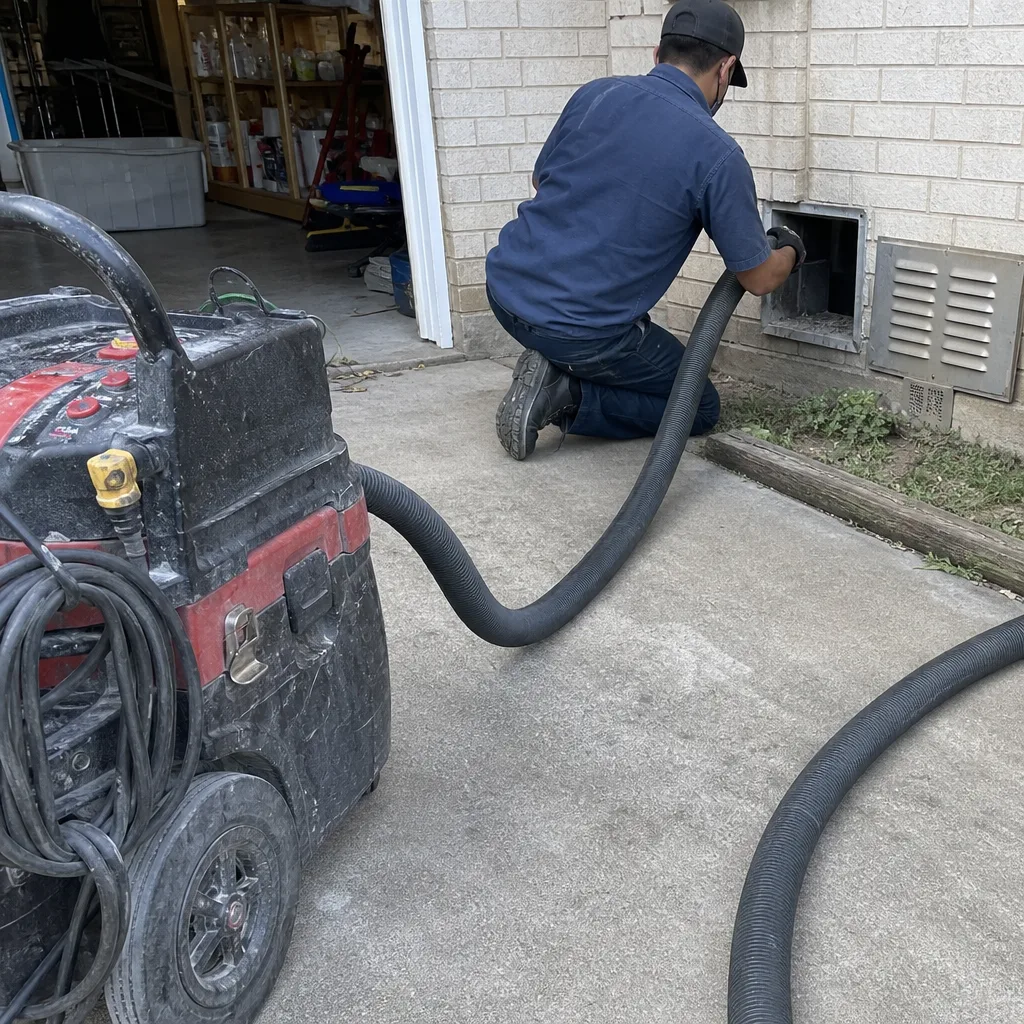
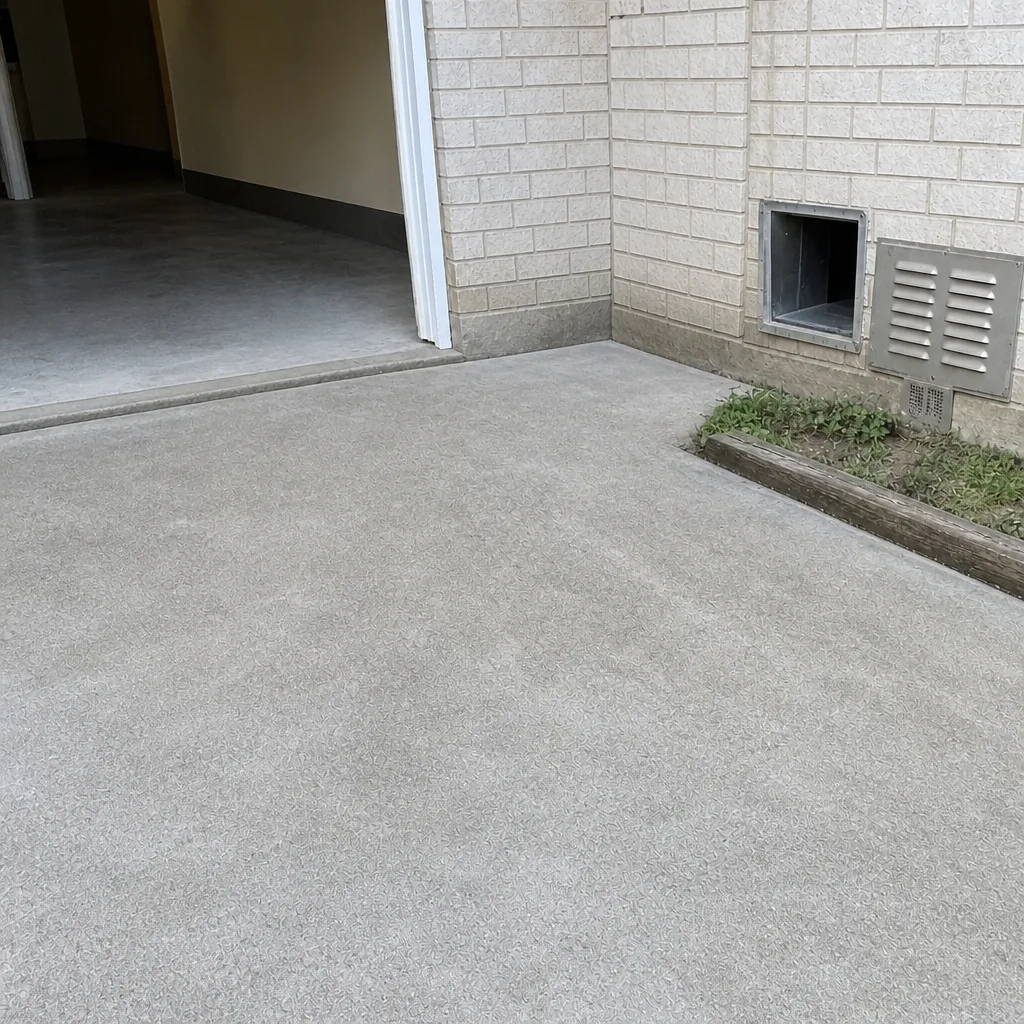
Whole-system duct and dryer vent check with before-and-after photos - you see exactly what came out of your vents
That "$99 whole-house special" is a bait ad - the real number appears once they are in your hallway, or the "clean" is a shop-vac at the register. We photograph the inside of your ducts before and after instead.
Air Duct Cleaning Maintenance Schedule: What to Do and When
If you replaced carpet in two rooms last year, ran a standard 1-inch fiberglass filter, and have a dog, your ducts are almost certainly dirtier than your neighbor’s who did nothing at all. That’s the problem with the “clean every 3 to 5 years” rule you see everywhere. It’s an average built from thousands of different homes, and averages don’t describe your house. Your interval is set by the variables inside your walls: how many people live there, what pets shed into the return air, what grade of filter you run, whether anyone has been sanding drywall, and how hard your system works through a Grand Prairie summer. This guide walks through those inputs one at a time so you can build a schedule that actually fits your home instead of borrowing someone else’s.
Quick Answer
Most Grand Prairie homes need professional duct cleaning somewhere between every 3 and 7 years, and the number moves based on pets, occupants, filter grade, and recent renovation dust. High-pet or renovation-heavy households often land closer to every 2 to 3 years. Between professional cleanings, your real maintenance job is filter changes, return grille checks, and a quick look at the blower compartment. The calendar is a backup; the filter is your leading indicator.
Styles & brands we work with
- Whole-home duct cleaning
- Dryer vent cleaning
- Camera inspection
- Sanitizing & deodorizing
Table of Contents
- What Actually Drives Your Cleaning Interval
- Building Your Home’s Custom Schedule
- The 1-Month, 6-Month, and Annual Checklists
- Using Your Filter as a Leading Indicator
- Grand Prairie’s Seasonal Contamination Window
- Events That Reset Your Clock Entirely
- What You Can Do vs. What Needs Negative Pressure
- The Separate Schedule for Your Dryer Vent
What Actually Drives Your Cleaning Interval
A cleaning interval is a load calculation, not a date. Duct contamination is the accumulation of particles that got past the filter and settled on surfaces the airstream touches. Change any of the four inputs below and your load changes with it. In our experience across Grand Prairie homes, most people are running one input at a level they didn’t realize was pushing their interval down by years.
Pets. A long-haired dog or cat produces dander and hair that clings to the interior walls of return ducts. One shedding pet is roughly the equivalent of adding a second filtration burden. Two or more large-breed pets and a household that keeps the system running through the summer often lands in the 2-to-3-year range.
Occupant count. People shed skin cells continuously, and every occupant adds to the particulate load. A five-person household generates meaningfully more biological dust than a two-person household in the same square footage.
Filter grade. This is the one most homeowners get wrong. A standard 1-inch fiberglass filter is a debris catcher for large particles, not a fine-particle filter. If you’re running fiberglass, more of what floats through your home is settling in the ducts instead of in the filter. Stepping up to a pleated filter in the MERV 8 to MERV 11 range captures far more before it reaches the duct interior. We work with Honeywell and Aprilaire filter and air-quality products precisely because that grade is where a filter starts doing real work.
Recent renovation. Drywall sanding, flooring removal, cabinet work, and any job that opens a wall or ceiling puts gypsum dust, sawdust, and insulation fibers into the air. That dust follows the return air straight into the duct interior. A meaningful renovation shortens your interval dramatically, often by years.
Run a rough count. If you have pets, a crowded household, a low-MERV filter, and recent construction dust all at once, you don’t have an “average” house. You have a house that needs a shorter schedule. If you have none of those and a high-grade filter, you can stretch the interval. air duct cleaning is the service that resets the clock once the load builds.
Building Your Home’s Custom Schedule
Here’s the framework we walk homeowners through. It’s not a scoring quiz; it’s four yes-or-no decisions that move you along a spectrum. Start with a base interval and adjust.
- Set your base. Start at 5 years if you have no pets, two or fewer occupants, a MERV 8+ pleated filter, and no renovation in the last two years. Start at 4 years if any one of those is not true. Start at 3 years if two or more are not true.
- Move up one step for heavy pet load. One shedding pet moves you up one bracket toward the shorter interval. Two or more moves you up another.
- Move up one step for recent renovation. Any drywall, flooring, or cabinet work in the last 24 months counts. Move up a second step if the home is still producing visible dust weeks after cleanup.
- Move up one step for a low-grade filter. If you’re running 1-inch fiberglass, move up. If you’re running a 4-inch media cabinet filter with Aprilaire or Honeywell-rated media, you can hold your bracket or step back.
Two more inputs are worth flagging here. First, occupant count. Second, how often your system runs. In Grand Prairie, the cooling season is long, which means the blower moves far more air through your ducts than in a cooler climate. That constant airflow does two things: it deposits more dust on duct surfaces, and it keeps the load recirculating instead of settling. During a hard Grand Prairie summer, the system runs nearly every day for months.
The result: Grand Prairie homes tend to land one step shorter on the interval than the national average. Not because the dust is worse, but because the runtime is longer and the seasonal pollen load is heavier. Bring your variables to the table and we’ll build a realistic schedule in the estimate.
The 1-Month, 6-Month, and Annual Checklists
The maintenance work you do between professional cleanings is where most of the interval is decided. These three lists cover what actually matters, in order of impact. Each one is deliberately short, because long maintenance checklists don’t get done.
Every 1 Month
- Inspect your filter. Not to change it necessarily, but to look at it. Read the next section on what this tells you.
- Walk the return grilles. Any grille that looks visibly gray or fuzzy is pulling load.
- Wipe the supply registers. Dust here is a fast indicator of what’s happening on the duct side.
Every 6 Months
- Replace or clean the filter at the interval its manufacturer states. If in doubt, use one month per MERV point as a rough guide (a MERV 11 filter at 90 days is a reasonable rule of thumb for a standard pleated filter).
- Pull the return grille on your largest return and look at the duct wall behind it with a flashlight. Anywhere you see a distinct layer of dust means the airstream has been carrying more than the filter can handle.
- Check the condensate drain on the air handler. A slow drain doesn’t clean ducts, but it does create the humidity conditions that make duct contamination worse.
- Inspect the dryer vent line from the back of the dryer to the wall. Heat and lint are the only two things that happen there.
Every Year
- Do a full visual sweep of every accessible run you can see through grilles and panels without opening the system.
- Check the blower compartment for a dust layer. A dust-covered blower wheel cuts efficiency and signals that more dust is passing through than your filter is catching.
- Look for any flexible duct that has been crushed, kinked, or disconnected. A disconnected run in a Grand Prairie attic is a direct path for attic dust into your living space.
- Note any sagging flex duct or poorly supported run. These become leak points that cost you cooling dollars and pull attic air into the system.
- Book a professional inspection if the six-month check was inconclusive or the filter is loading faster than it used to.
None of these tasks require a tool you don’t already own. What they do is generate the information that makes a professional cleaning decision easy and evidence-based instead of guesswork.
Using Your Filter as a Leading Indicator
A filter at 30 days tells you more about your duct load than any calendar does. Here’s how to read it.
Pull the filter and hold it up to a light. Look at the color across the face and the depth of dust where the return air enters.
- Lightly gray, evenly coated. Normal load. Your interval is probably where you think it is.
- Heavy gray with dark patches. Your filter is loading fast. Either your interval is shorter than you think, or the filter grade is too low. Check both.
- Visible fibers, hair, or lint matted on the entry side. Pet load is high. Move up a bracket.
- White or gray powder across the face. Drywall dust from a renovation. If this is happening more than 3 months after the work, the renovation dust is still working through your system.
- Filter looks barely used after months. Either the system isn’t running much (unusual in Grand Prairie), or air is bypassing the filter. Check the filter fit and the cabinet seal.
The corollary here is that the interval is not fixed once you set it. If your filter starts loading faster than it did a year ago, something in the home changed: a new pet, a renovation, a filter downgrade, or a return leak you haven’t found yet. Each of those changes your interval. That’s why we inspect filters as part of every estimate rather than just asking a homeowner how long it’s been.
The single highest-impact action in this guide is to move from a 1-inch fiberglass filter to a pleated filter in the MERV 8 to MERV 11 range. That one change reduces the amount of fine particle dust reaching your duct interior by a wide margin, and it costs less per year than a longer cleaning interval would save you. We work with Aprilaire media cabinets and Honeywell filter systems because they hold a higher MERV rating across a larger surface area, which extends filter life and reduces how often you change the media itself.
Grand Prairie’s Seasonal Contamination Window
Grand Prairie has a specific airborne dust calendar, and the duct load runs on it. Read this section as your local timing guide.
February through May is the heavy pollen window. Cedar peaks first, then oak, then grass pollen through the spring and into early summer. That pollen is fine enough to pass a standard filter, and it settles inside the duct interior on return drops and trunk lines. If you clean in January, you’re cleaning out last year’s pollen just as the next season starts. If you clean in late spring, you’re pulling out a fresh load that’s already started to deposit.
June through September is the heavy runtime window. Your system runs almost continuously through a Grand Prairie summer, and that means the blower is circulating air and depositing dust on duct walls around the clock during the day. A duct interior cleaned in early summer stays cleaner through the season than one cleaned in the fall, because there’s no heavy runtime ahead of it to load the walls back up.
October through January is the settling window. Runtime drops, windows open more, and the particles that were suspended in summer air settle. That settled dust is what gets stirred back up the following spring.
What this means practically: late spring, just after the pollen peak and just before the heavy cooling season, is a natural default timing for a cleaning in Grand Prairie. It removes the accumulated pollen load and then lets a freshly cleaned system run through the highest-demand months.
For homes with a renovation, the timing is different. Clean when the renovation dust has finally stopped being produced, not before. Nothing is more frustrating than cleaning a duct interior and then watching the sheetrock sanding dust fill it again the following week. Wait for the work to be finished, the cleanup done, and the filter changed at least once post-renovation.
Events That Reset Your Clock Entirely
Some events don’t shift your interval, they erase it. After any of these, your previous schedule no longer applies and you’re at zero regardless of when you last cleaned. Recognize these as they happen.
- Home flooding or significant water intrusion. Any water that entered the duct system, or any humidity spike significant enough to feed microbial growth on duct surfaces, resets the clock. Damp dust is not the same as dry dust, and it needs to be removed, not just aired out. If your air handler sat in standing water, everything past it needs professional inspection.
- HVAC replacement. When the system is replaced, the contractor typically opens the plenum and trunk connections. That means duct interior access is open, dust from the old equipment has settled inside the new run, and the system’s pressure profile has changed. A brand-new system moving through dirty ducts defeats most of what you paid for it.
- Pest evidence. Rodent droppings, insect casings, or nesting material inside a duct run is a health and safety issue and needs professional remediation, not a filter change. Note also that rodents often enter through return ductwork in a Grand Prairie attic.
- Any work that opened duct access panels. A plumber who pulled a return boot, an electrician who ran new wire through a trunk line, a contractor who opened the air handler cabinet, all of it resets the clock because post-work dust always deposits in the run.
- Mold or musty odor. If you can smell a damp, earthy odor when the system kicks on, the duct interior has an active issue. This is not a plain cleaning; it’s a remediation.
When any of these happen, the right next move is an inspection before you schedule a cleaning. That’s the difference between a professional answer and a guess. Our Prestige Air Duct team inspects first and builds a plan around what we find, using Rotobrush and Nikro equipment sized to the run we’re cleaning.
What You Can Do vs. What Needs Negative Pressure
The line between homeowner maintenance and professional cleaning is not arbitrary. It’s defined by what you can reach without touching the duct system itself. Everything you can see through a grille or return, you can maintain. Anything past the grille face is professional territory.
Homeowner Tasks
- Filter changes at the interval the filter states
- Return and supply grille cleaning
- Visual inspection through grilles with a flashlight
- Blower compartment dusting (with the system power off)
- Return air path clearing (furniture, rugs, boxes blocking return airflow)
- Dryer vent lint trap cleaning after every load
Professional-Only Tasks
- Cleaning the interior of trunk and branch duct runs
- Contact cleaning with Rotobrush or Nikro systems, which agitate the duct wall
- Negative-pressure containment with an Abatement Technologies HEPA unit, so the dust you’re dislodging is captured instead of released into the home
- Source removal of settled debris from return drops and boots
- Duct sealing and repair where leaks are found
- A full-coverage inspection of the return system and every accessible branch
The reason professional equipment matters is not the tool brand; it’s the containment. A shop vacuum attached to a grille creates more airborne dust than it removes. A proper cleaning uses negative pressure to hold the dust collection at the source while the brush agitates the duct wall. The HEPA filter on the collection unit captures what the brush loosens. Without that combination, a “cleaning” actually deposits more fine dust into the home than it removes. That’s the difference the Prestige standard is built around: professional-grade equipment and verified containment, not a shop vac and a brush on a string.
If you’re in the middle of deciding whether your situation needs a professional, the answer is simple. If your filter is loading faster than it used to, if there was water or pest activity, or if it’s been 3 or more years since the last professional cleaning, you’re past the maintenance stage.
The Separate Schedule for Your Dryer Vent
Dryer vent cleaning runs on a completely different clock than duct cleaning, and it needs its own monitoring. We treat it as a fire-safety service, not a cosmetic one, because the accumulation inside a dryer vent is the fuel source for a common house fire. Lint is highly combustible and it accumulates silently.
The homeowner check is monthly: pull the lint trap, clean it, and inspect the flexible line behind the dryer. If you can see a light layer of lint starting to build on the wall-side connection, that’s a sign the vent is loading faster than it should. Every load leaves lint behind, and it’s the accumulation across hundreds of loads that becomes a hazard.
The professional interval depends on load: a household running several loads per week, especially with a long vent run, may need cleaning annually. A household running one or two loads a week might stretch to every two years. Any vent run that goes up and over, with multiple elbows, shortens the interval because lint settles in every elbow.
dryer vent cleaning is a distinct service for us, not an add-on to the duct visit. The protocol is different: we inspect the entire run, brush it with equipment sized to the run, and confirm airflow at the exterior termination. If the vent has been crushed or disconnected somewhere in the attic, that’s a repair, and we handle it in the same visit. Adding a dryer vent check as a fixed line on your annual HVAC maintenance also catches the crush-before-fire scenario before it becomes one.
Common Mistakes to Avoid
- Following a fixed interval regardless of your home. The 3-to-5-year rule is a population average, not a schedule for your house. It ignores pets, filter grade, occupancy, and renovation. Build your interval from your own variables.
- Downgrading your filter to “save money” or “keep airflow up.” A 1-inch fiberglass filter is not doing meaningful filtration, and the money you save on filters gets spent on shorter cleaning intervals. A pleated MERV 8 to MERV 11 filter is the right baseline.
- Cleaning before your renovation is finished. If you clean in the middle of a sheetrock job, all that airborne gypsum dust comes right back in. Clean after the renovation, once the work is done and the filter has been changed.
- Ignoring the return side. Most of the dust load lives in the return system, not the supply. A cleaning that only does the supply registers isn’t a cleaning; it’s a cosmetic gesture.
- Attaching a shop vac to a return and calling it a cleaning. A shop vac without HEPA filtration and negative pressure containment can put more fine dust into the air than it pulls out. The dust you release is the dust you breathe for weeks afterward.
- Treating the dryer vent as a decorative item. A crush in the vent line behind the dryer, or in the attic run, is a fire fuel condition. If you can’t feel good airflow at the exterior termination, it needs to be inspected.
- Skipping inspection after a water event or pest removal. Damp dust and rodent residue don’t clean themselves up with a filter change. Both need professional assessment and, usually, remediation.
See the difference
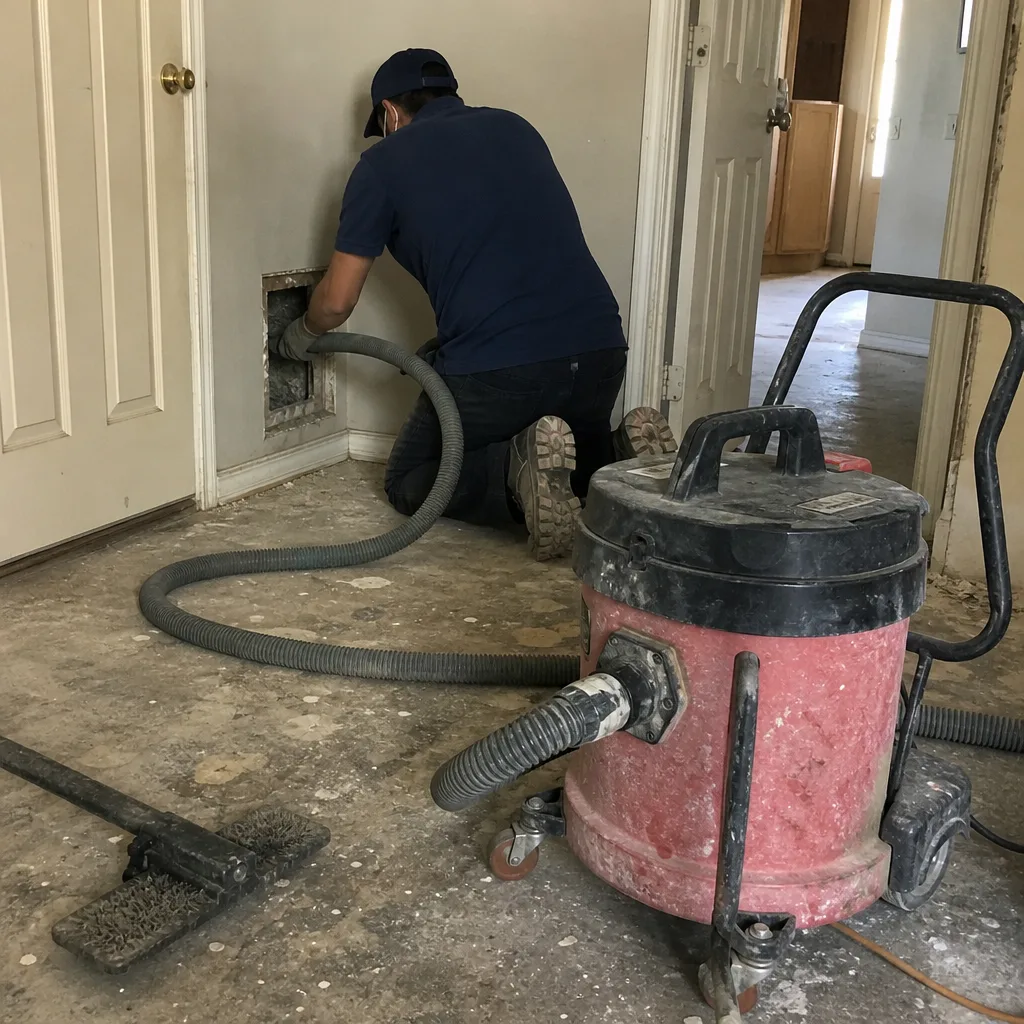 Before
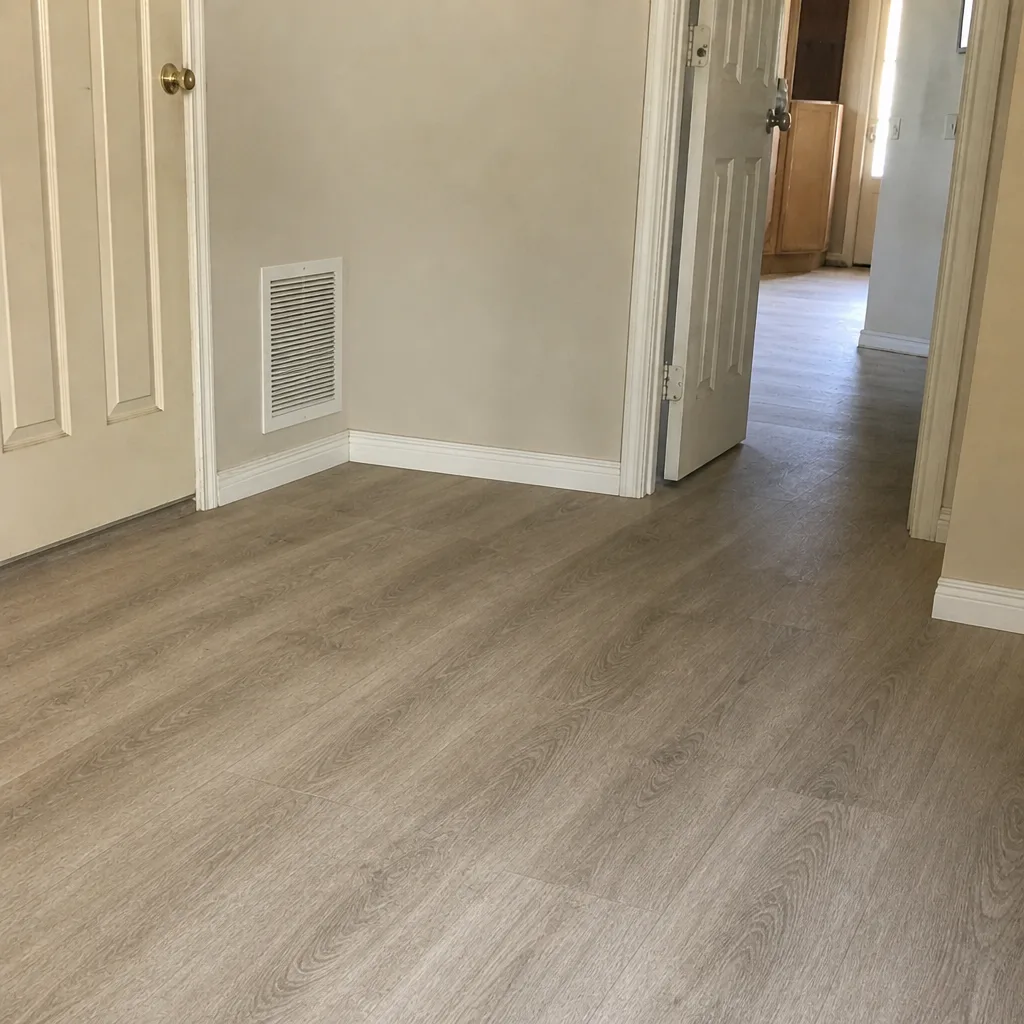 After
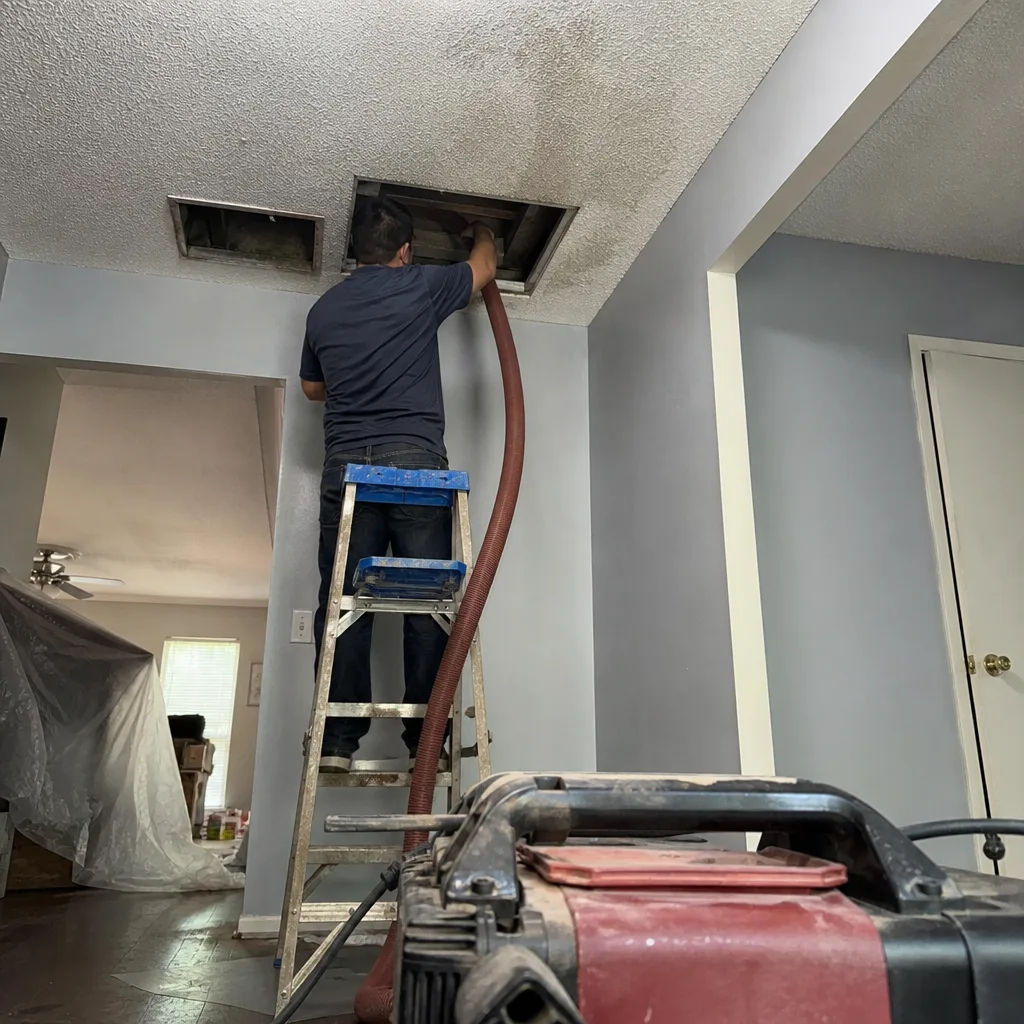 Before
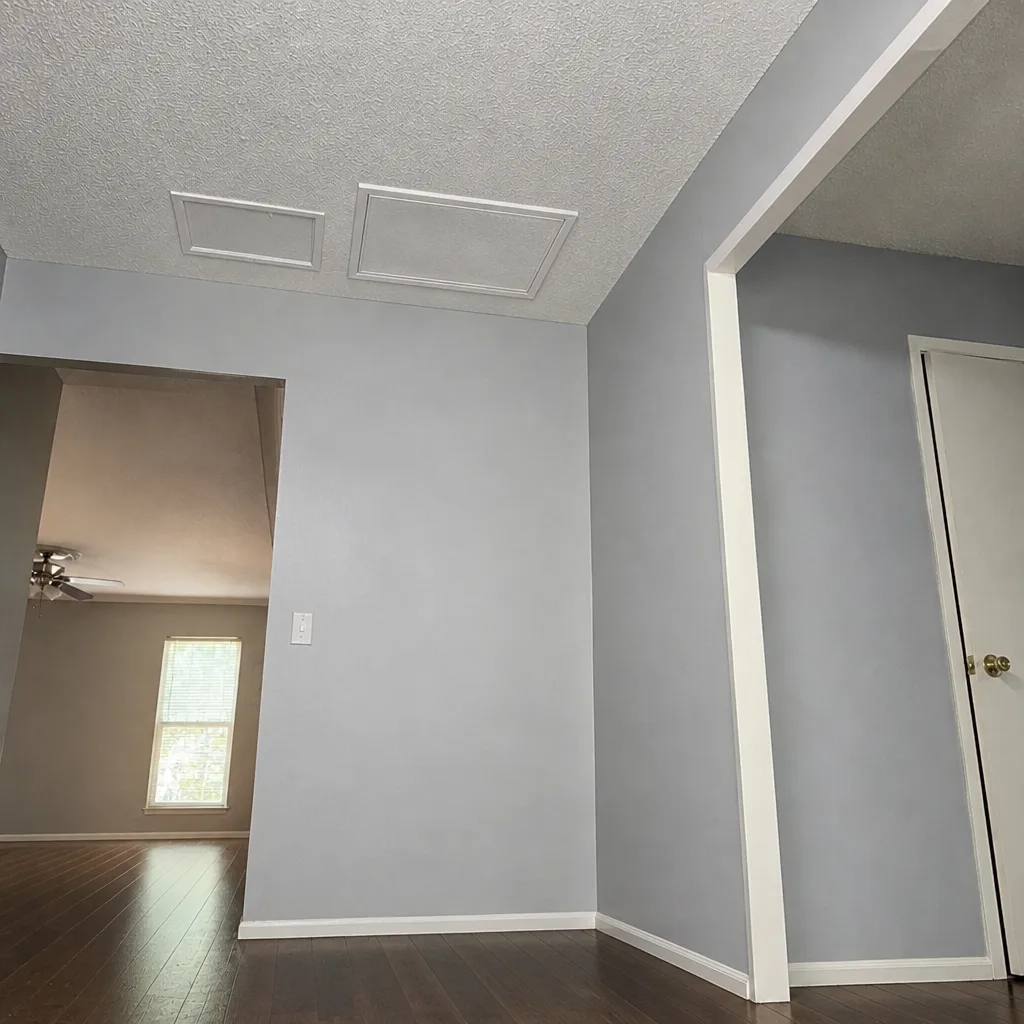 After
 Before
 After
When to Call a Professional
There are specific triggers that make a professional visit the right call, not a maintenance decision. If any of the following applies to you, schedule an inspection and let the estimate be the deciding data point.
- Your filter is loading faster than it used to, and you’ve already replaced it at the correct interval
- You’ve had water intrusion, a plumbing leak, or significant humidity issue in the home
- Your system was just replaced, and the contractor opened the plenum or trunk connections
- You’ve seen or suspected rodent activity in the return duct or attic
- Your dryer vent has a crushed or disconnected section, or airflow at the exterior termination feels weak
- You’re past the interval your own variables produce
- You can smell a musty, damp odor when the system kicks on
- You’ve had significant renovation work in the last year, especially drywall or flooring
We build estimates around a full inspection, a written price per system, and a schedule that matches your actual home. If the inspection shows repair is needed, we handle it in-house with duct sealing and repair, so you’re not paying a second contractor to fix what the first contractor found. Prestige Air Duct offers free estimates in Grand Prairie. Call (866) 361-6858. We answer 24/7. Fast dispatch from 7am to 7pm, Sunday through Friday.
Frequently Asked Questions
Most homes need professional duct cleaning every 3 to 7 years, but that range only applies if you’re a low-pet, no-renovation, high-MERV-filter household. Add pets, occupants, a low-grade filter, or a recent renovation, and your interval drops. Grand Prairie’s long cooling season and heavy spring pollen load push most homes one step shorter than the national starting point. Call (866) 361-6858 for an exact quote based on your home’s variables.
Late spring, just after the cedar, oak, and grass pollen peak and just before the heavy summer cooling season, is the natural default timing for Grand Prairie. That removes the accumulated pollen load before the system runs hard for four months. Homes with a renovation should clean after the work is finished, regardless of season. Call (866) 361-6858 if you’d like a timing recommendation based on your home.
Three indicators tell you: your filter is loading faster than it used to, you can see accumulation on the duct wall behind a return grille with a flashlight, and you have any of the reset events (renovation, water intrusion, HVAC replacement, or pest activity). A calendar alone is not evidence. Call (866) 361-6858 to schedule a free inspection and get a professional read.
Yes, significantly. A 1-inch fiberglass filter catches large particles and lets most fine dust into the duct interior, while a pleated MERV 8 to MERV 11 filter captures far more before it reaches the duct wall. Upgrading your filter is the single highest-impact maintenance change you can make. Call (866) 361-6858 and we’ll walk through filter options for your system.
Usually because the equipment is different. A low quote is often a shop vacuum and a brush, which agitates duct dust without capturing it under negative pressure, so the dust ends up in your home. A defensible cleaning uses professional-grade equipment and verified containment, which costs more to run. Call (866) 361-6858 for an estimate built around the actual method.
Dryer vent cleaning usually lands annually for a busy household, especially with a long or elbow-heavy vent run, and every two years for lighter use. It’s a fire-safety service, not a cosmetic one. Any crushed or disconnected section needs repair, not just cleaning. Call (866) 361-6858 for a dryer vent inspection.
The Bottom Line
There is no universal “clean every 3 to 5 years” answer that fits your home. Your interval is set by pets, occupants, filter grade, and recent renovation, plus the reality that Grand Prairie runs a long cooling season and a heavy spring pollen load. Build your schedule from those inputs, watch your filter as the leading indicator, run the monthly and annual checklists, and treat renovation, water intrusion, HVAC replacement, and pest activity as complete resets. When the variables push you past the maintenance stage, get a professional inspection first and let the estimate do the deciding. Prestige Air Duct builds its schedules on professional-grade equipment from Rotobrush and Nikro with HEPA containment, so the cleaning is verified, not assumed.
If you’re in Grand Prairie and want an honest read on your home’s schedule, we’ll be glad to walk through it. Call (866) 361-6858. We answer 24/7. Fast dispatch from 7am to 7pm, Sunday through Friday. Estimates are free, and the price is set per system from the written estimate before any work begins.
Written by the team at Prestige Air Duct.